

What may a caretaker do – and what not? Powers and limits in everyday practice
Whether it is a reported defect, a conflict between residents or a repair carried out without authorisation — in everyday practice the role of a caretaker service is quickly overestimated. Here is an overview of what a caretaker service is actually responsible for, and where the line between it and the managing agent clearly runs.
The caretaker acts on instruction, not in his own right
A caretaker service is a contractor to the residents' association or the managing agent — it acts solely within the agreed scope of work. What German law calls the Hausrecht (the authority to decide who may enter, or to give instructions with effect towards outsiders) derives from ownership or possession of the building — § 903 BGB gives the owner the right to „andere von jeder Einwirkung auszuschließen“ (to exclude others from any interference). It therefore stays with the owner or the managing agent and does not pass automatically to the caretaker service, even though that service is the most visible point of contact on site day to day.
Typical tasks within day-to-day business
- Checking for and reporting defects (rather than repairing them without authorisation outside the agreed scope)
- Minor repairs within the agreed scope of work
- Locking-up duties, checking communal areas, monitoring technical installations (e.g. heating, lighting)
- Acting as the point of contact for residents on everyday matters — without any authority to decide management questions
Where the limits lie
- Contractual decisions (e.g. engaging new contractors, larger repairs) remain a matter for the managing agent or for a WEG resolution. Under § 27 Abs. 1 WEG, the managing agent may take measures on its own initiative only where they are of minor significance and do not give rise to substantial obligations, or where they are necessary to meet a deadline or to avert a disadvantage — everything beyond that is decided by the owners (§ 19 Abs. 1 WEG). This applies all the more to a caretaker service as a downstream contractor.
- Conflicts between residents(noise, arguments about parking spaces and the like) are in principle not the caretaker's job — at most he can mediate and pass the matter on to the managing agent.
- No sanctions on its own authority: a caretaker service may not impose contractual penalties or remove property belonging to third parties (e.g. wrongly parked vehicles, items left standing around) without agreement. Anyone who deprives a possessor of possession against their will, or interferes with that possession, acts unlawfully under § 858 BGB — depending on the individual case this can amount to verbotene Eigenmacht (unlawful interference with possession).
- Larger structural alterationsrequire a WEG resolution regardless of the caretaker's assessment: measures that go beyond the proper upkeep of the common property are decided by the flat owners under § 20 Abs. 1 WEG.
Why a clear description of the work helps both sides
Many misunderstandings arise because the scope of work in the contract is worded too vaguely. A detailed schedule of services set down in writing protects both the residents' association (clear expectations, transparent costs) and the contractor (no argument about extras that were expected “tacitly”). How such a schedule can be spread across several firms or given to a single provider is covered in our article Caretaker service vs. individual firms — what pays off for managing agents?.
Practical tip
When awarding the contract, actively ask for a written and as specific as possible description of the work, rather than general wording such as “general caretaking duties” — that saves a lot of argument if a dispute arises.
How Zamsa helps
Our caretaker service works to a schedule of services agreed in writing — every item is named, every visit is documented. Anything we notice outside the agreed scope we report to the managing agent instead of deciding on it ourselves. That way everyone involved can see what has been done and where the decision rests with the managing agent.
The limits described here are general practical guidance; in any individual case it is always the specific service contract or the WEG resolution that determines the actual scope of duties.
Sources
- § 903 BGB – powers of the owner (the basis of the Hausrecht)
- § 858 BGB – verbotene Eigenmacht (unlawful interference with possession)
- § 19 WEG – regulation of management and use by resolution
- § 20 WEG – structural alterations, resolution of the flat owners
- § 27 WEG – duties and powers of the managing agent
Not legal or tax advice
This article gives a general overview and is no substitute for individual legal or tax advice. Laws, deadlines and responsibilities can change and may differ in an individual case. For a binding assessment of your particular situation, please consult a solicitor or tax adviser, or the relevant authority.
You might also find this useful.
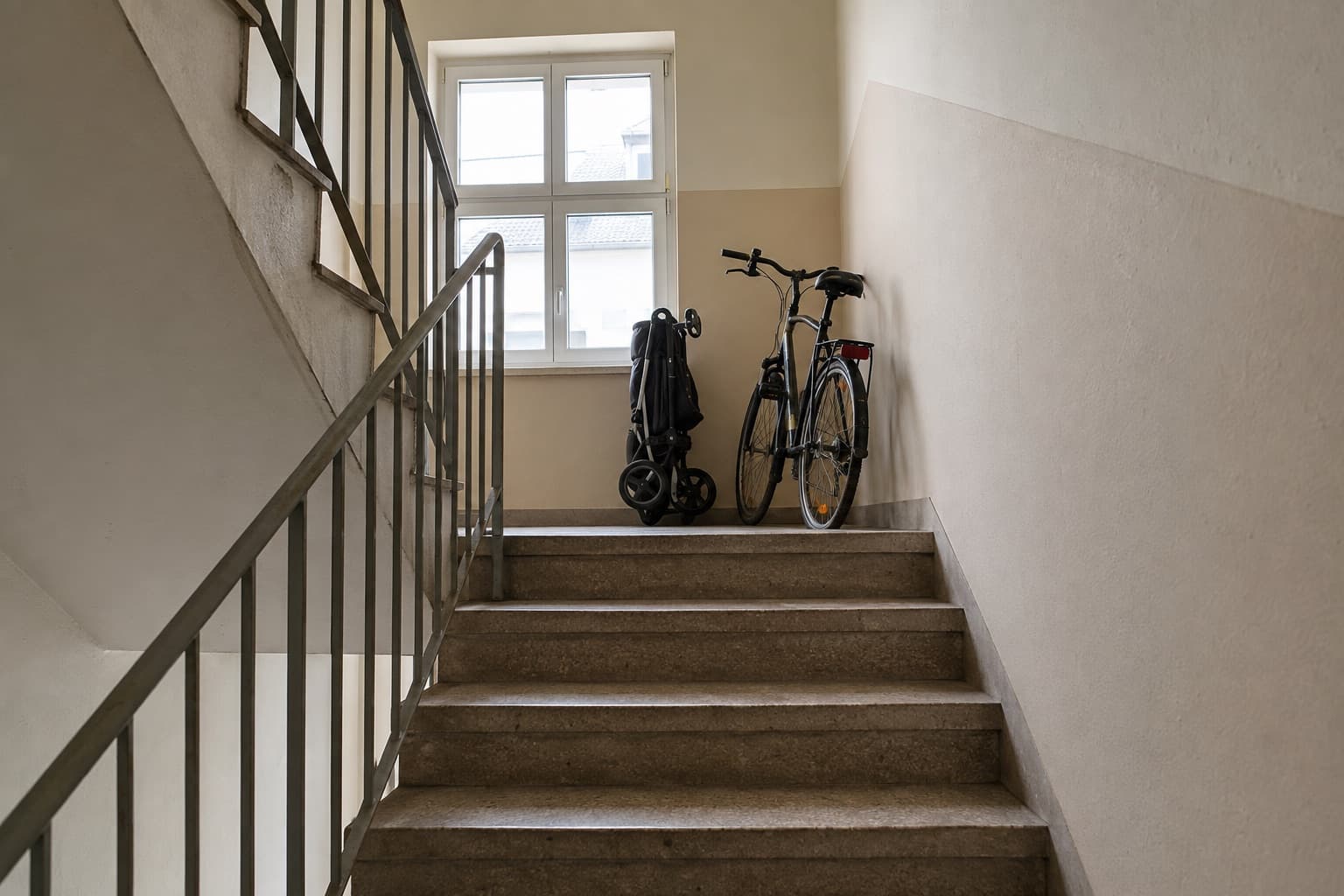
Treppenhaus als Fluchtweg: Was darf dort stehen — und was nicht?
Read more
Stairwell cleaning: cycle, checklist, who is responsible?
Read more
Caretaker service vs. individual firms — what makes sense for managing agents?
Read more
Routine cleaning or deep cleaning? The difference — and how often each is needed
Read more
Property inspections: why regular checks prevent consequential damage
Read more
Spielplatzkontrolle in Wohnanlagen: Pflichten, Intervalle, Dokumentation
Read more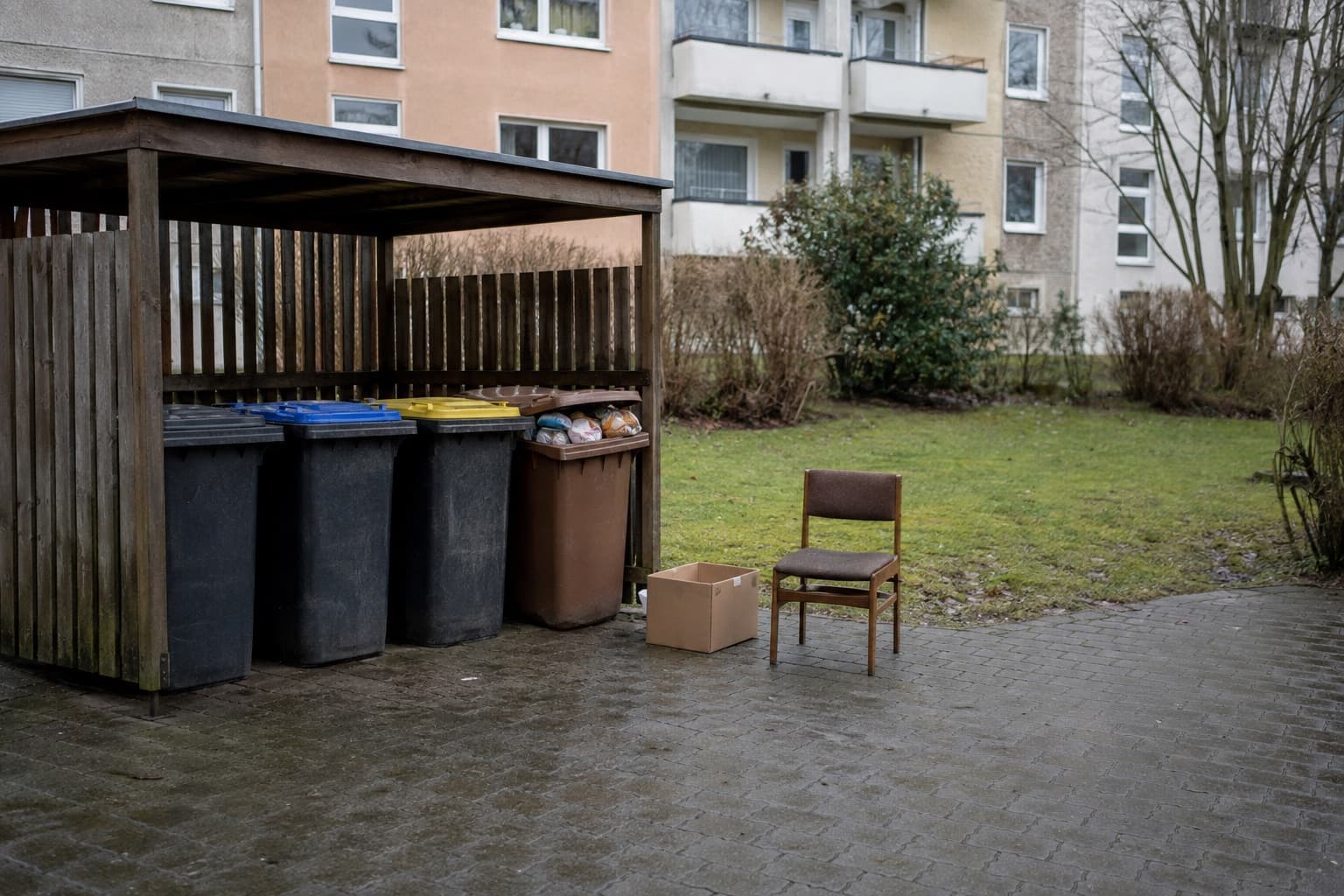
Müll im Mehrfamilienhaus: Was Fehlwürfe wirklich kosten
Read more
The clearing and gritting duty in Hesse — what owners and landlords need to know
Read moreLet us talk about your property.
Tell us what you need — we usually reply within one working day with a quote, free and without obligation.
- 1


Send an enquiry
Through the contact form, by phone, WhatsApp or email — whichever suits you best.
- 2


Arrange a visit
We get back to you promptly and, where useful, arrange a visit on site that fits your schedule.
- 3


Receive a free quote
You get a transparent quote with no obligation — no hidden costs, no small print.
- 4


You decide
No pressure and no lengthy commitment: take your time to decide whether it is a good fit.