
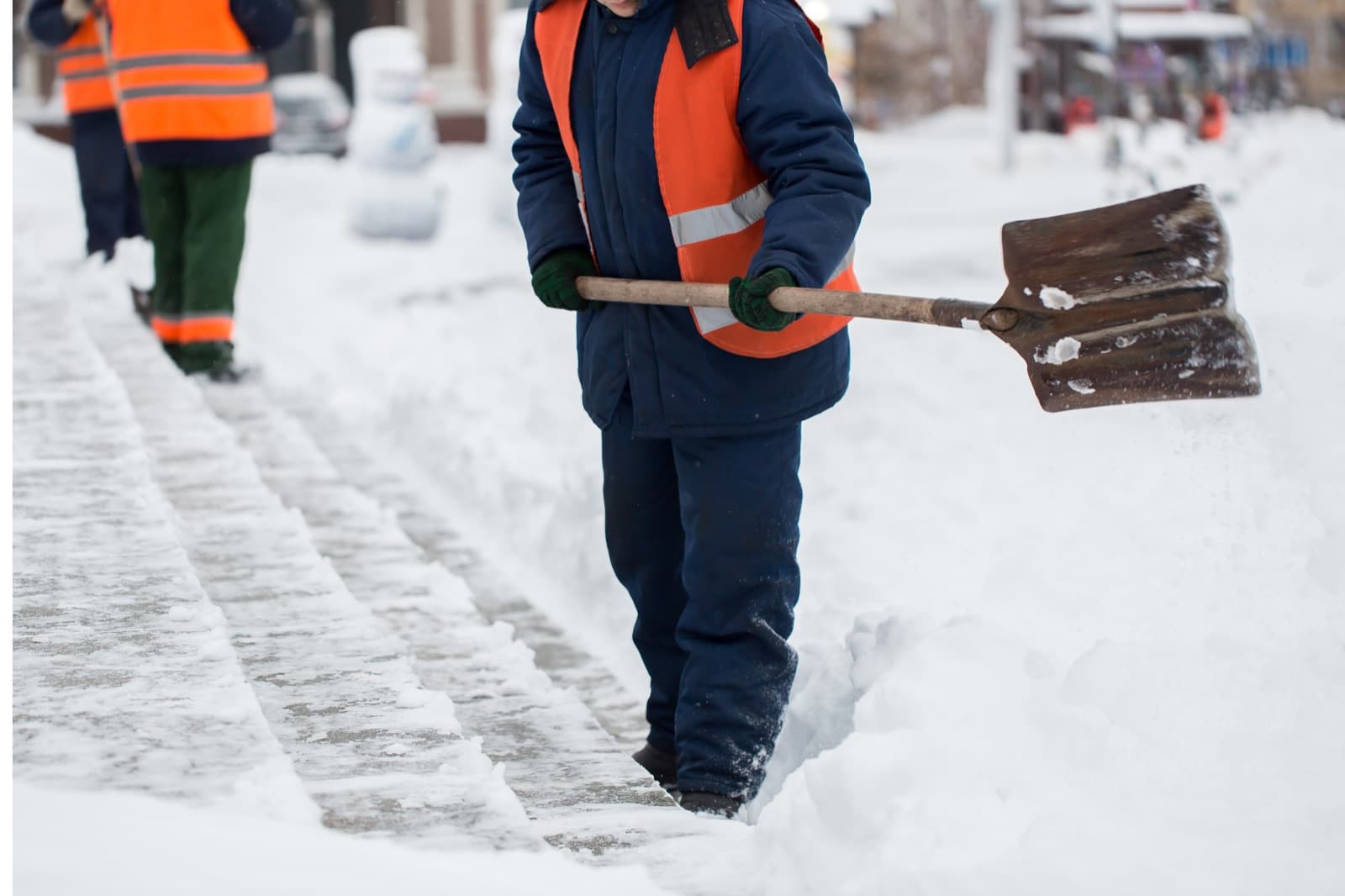
The clearing and gritting duty in Hesse — what owners and landlords need to know
As soon as the first snow settles or the roads freeze over during the night, owners, landlords and managing agents all face the same question: who actually has to clear and grit — and what happens if nobody does? An overview of the basics of the clearing and gritting duty and the way it is usually handled in Hesse.
Who is responsible in the first place?
Under § 10 of the Hessisches Straßengesetz (HStrG, the Hesse road act), the duty to clean and clear footpaths originally lies with the local authority. Subsection 5, however, allows local authorities to transfer that duty to property owners by local by-law — and practically every municipality in Hesse makes use of it. Owners then have to keep the footpath along their property in a condition that is safe to walk on. Where a property is let, that duty can in turn be passed on to the tenants in the tenancy agreement. This does not release the landlord entirely, though: they remain under a duty to check that clearing really does take place reliably (a supervisory duty, Überwachungspflicht). If an accident happens despite the duty having been transferred, liability under § 823 BGB can still arise — more on that in our article Liability for black-ice accidents without winter maintenance.
Practical tip
This is precisely why many residents' associations and managing agents hand winter maintenance to a professional service provider instead of splitting it up among individual tenants: a service provider clears to a plan and documents every call-out — clear evidence, should there ever be a dispute, that the duty was met.
At what times does clearing have to happen?
The exact times are set by each local authority in its own by-law (§ 10 Abs. 5 HStrG leaves the detail to the municipalities) — there is no single rule covering the whole of Hesse. In many places the usual practice is a window of roughly 7:00 to 20:00 on working days; on Sundays and public holidays the duty mostly starts a little later (often from 9:00) — but what counts is always the by-law of the particular municipality. If snow keeps falling or ice forms again during the day, clearing once in the morning is not enough — you have to go out and clear again as often as the conditions require.
What exactly does “cleared and gritted” mean?
- A sufficiently wide strip of the footpath must be free and safe to walk along — depending on the local by-law, usually somewhere between 0.80 and 1.50 metres.
- Where it is icy, grit has to be spread as well — many municipalities restrict pure de-icing salt for environmental reasons and require abrasive materials such as sand or grit, with salt often allowed only in extremely icy conditions.
- Access to building entrances, bin stores and letterboxes is part of the clearing duty too.
What happens if nobody clears?
If somebody slips on an uncleared footpath and is injured, the person under the duty to keep the way safe — owner, tenant or the service provider engaged — can be pursued for damages and for compensation for pain and suffering. For details of how that liability works in practice, and how complete documentation protects you against it, see our article Liability for black-ice accidents without winter maintenance.
How Zamsa helps
We take on winter maintenance for residential and commercial properties throughout the Groß-Gerau district and the adjoining Rhine-Main region — including photographic documentation of every call-out in the customer portal, so that you can always prove that clearing took place if it is ever questioned.
Sources
- § 823 BGB – liability in damages
- Verwaltungsportal Hessen – winter maintenance / clearing and gritting duty
- Haus & Grund Hessen on the clearing and gritting duty
- mietrecht.org – transferring the duty to keep the way safe to the tenant
- Stadt Gießen – winter maintenance / clearing and gritting duty (an example of a municipal by-law)
Not legal or tax advice
This article gives a general overview and is no substitute for individual legal or tax advice. Laws, deadlines and responsibilities can change and may differ in an individual case. For a binding assessment of your particular situation, please consult a solicitor or tax adviser, or the relevant authority.
You might also find this useful.

Winter maintenance costs: what does the price depend on — and how do you save?
Read more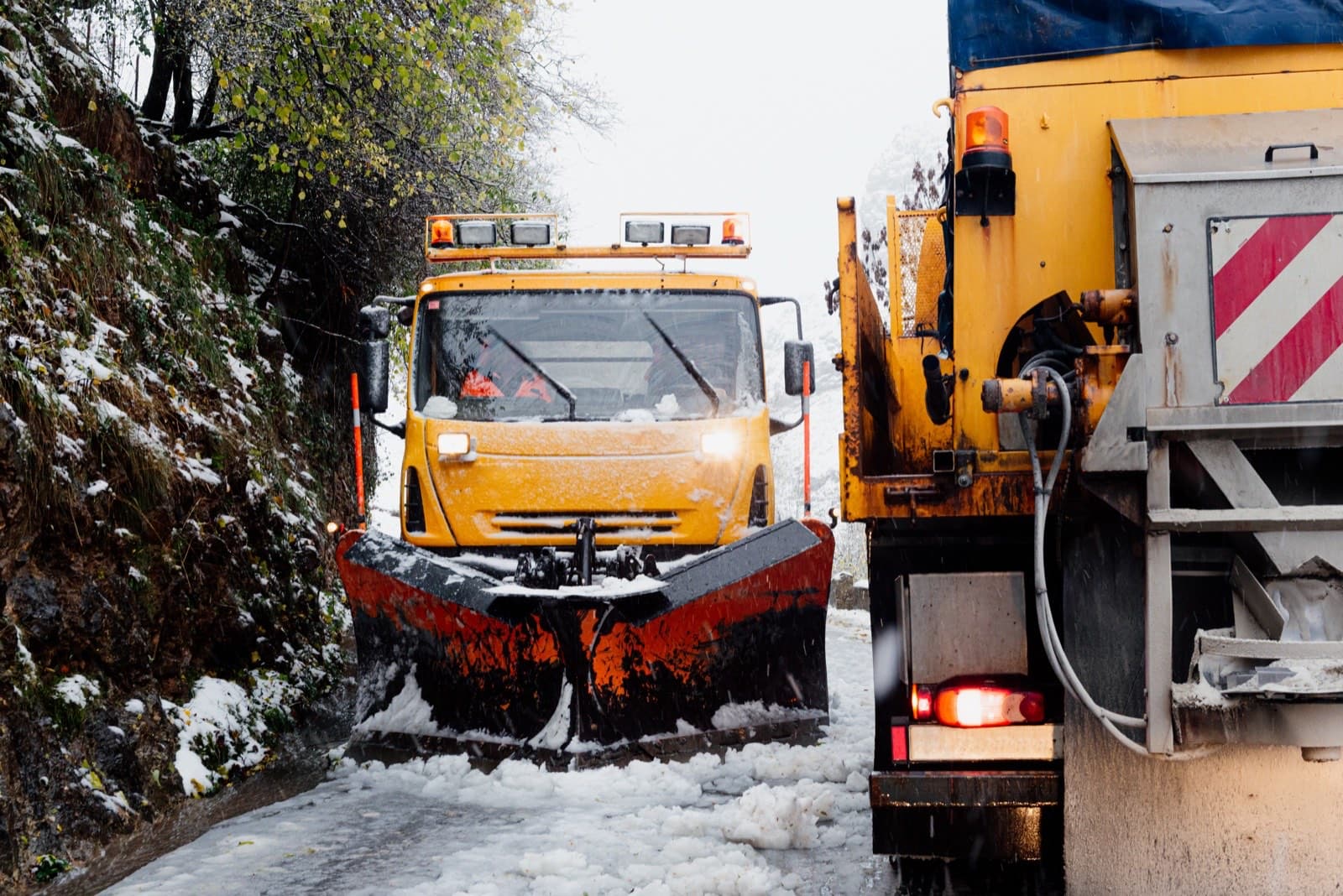
Liability for black-ice accidents without winter maintenance
Read more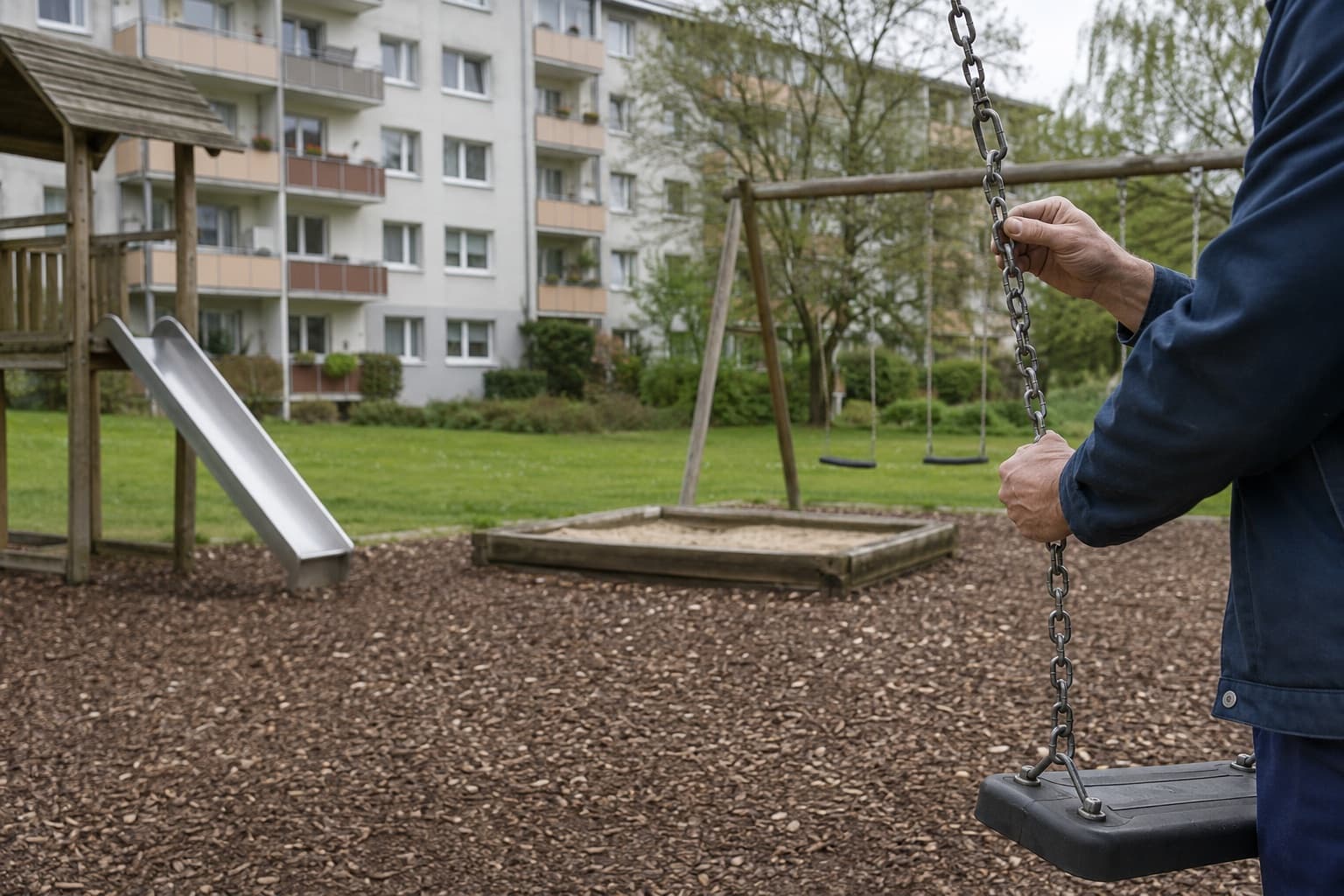
Spielplatzkontrolle in Wohnanlagen: Pflichten, Intervalle, Dokumentation
Read more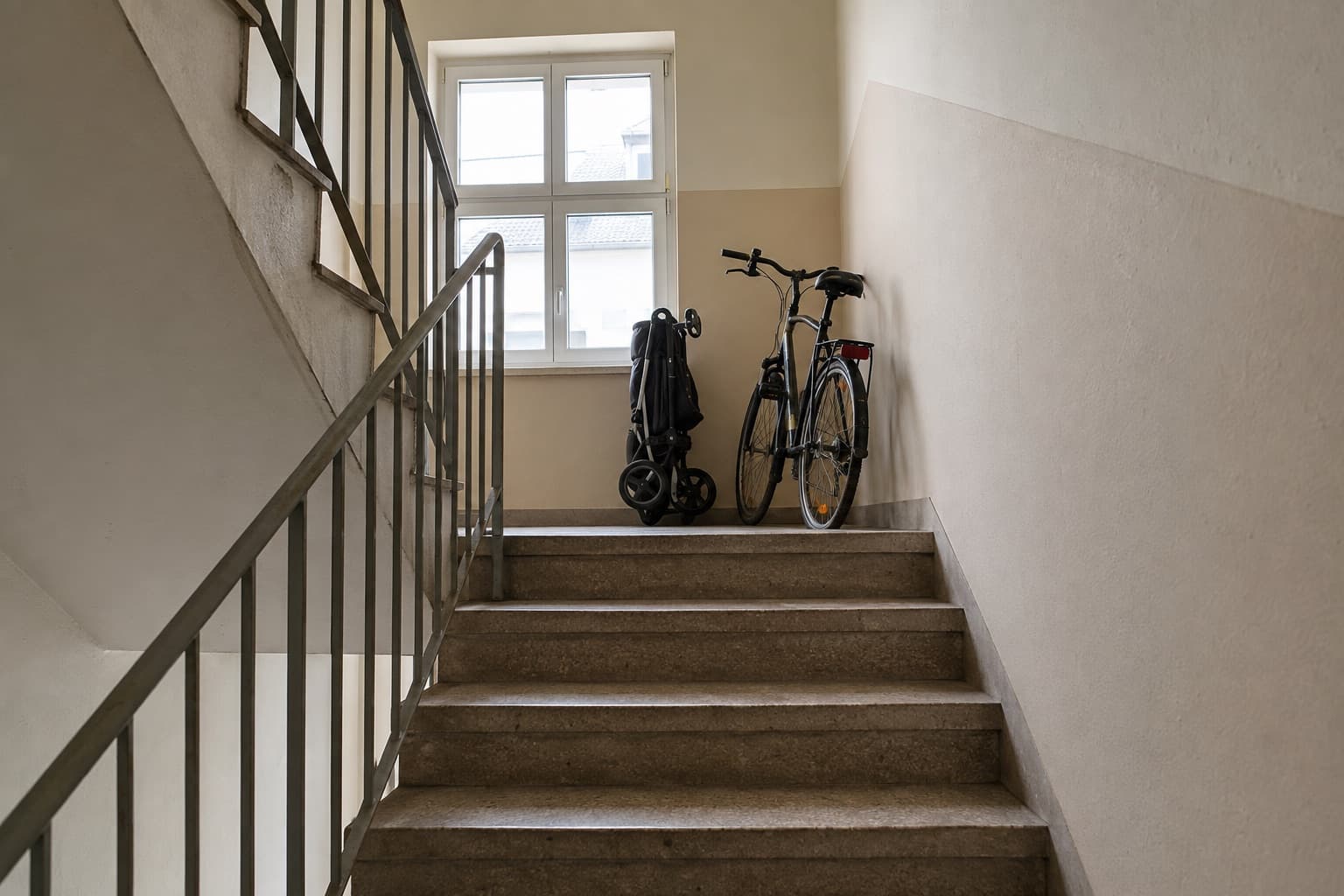
Treppenhaus als Fluchtweg: Was darf dort stehen — und was nicht?
Read more
Müll im Mehrfamilienhaus: Was Fehlwürfe wirklich kosten
Read more
Stairwell cleaning: cycle, checklist, who is responsible?
Read more
Caretaker service vs. individual firms — what makes sense for managing agents?
Read more
Routine cleaning or deep cleaning? The difference — and how often each is needed
Read moreLet us talk about your property.
Tell us what you need — we usually reply within one working day with a quote, free and without obligation.
- 1


Send an enquiry
Through the contact form, by phone, WhatsApp or email — whichever suits you best.
- 2


Arrange a visit
We get back to you promptly and, where useful, arrange a visit on site that fits your schedule.
- 3


Receive a free quote
You get a transparent quote with no obligation — no hidden costs, no small print.
- 4


You decide
No pressure and no lengthy commitment: take your time to decide whether it is a good fit.