

Winter maintenance costs: what does the price depend on — and how do you save?
“What does winter maintenance actually cost?” is one of the first questions owners and managing agents ask us — and one there is no blanket answer to. The price depends on several factors, and some of them you can actively influence.
What does the price depend on?
- Area: the length of footpath, the driveways and the parking spaces set the baseline amount of work per call-out.
- Location and access: properties off the usual route add travelling time.
- Call-out model: flat-rate seasonal contracts are costed on an average number of call-outs; individual call-outs based on the actual weather are more flexible, but often more expensive each time.
- Spreading material: sand or grit is usually cheaper than special de-icing agents — and in many municipalities it is what the rules require anyway.
Tips that really do save money
Practical tips for saving money
State the area realistically: if you only commission the strip of footpath actually covered by the duty rather than the whole plot, the work involved drops noticeably.
Join forces with the neighbours: where several plots adjoin one another, a joint contract is often worthwhile — the service provider saves travelling time, and that shows up in the price.
A seasonal contract instead of individual call-outs: if you have clearing done every winter anyway, a flat rate usually works out cheaper than repeated one-off orders.
Arrange it early: if you only start looking for a provider when the first cold snap arrives, you often pay a premium for availability at short notice — a contract before the season starts is cheaper.
What to watch for when comparing quotes
A low flat price is not automatically the better offer. Check whether the price includes liability documentation (evidence that clearing really took place), how many call-outs per season have realistically been costed in, and whether clearing again several times in one day is covered as well — that is exactly what can make the difference in a dispute or a liability claim.
Not legal or tax advice
This article gives a general overview and is no substitute for individual legal or tax advice. Laws, deadlines and responsibilities can change and may differ in an individual case. For a binding assessment of your particular situation, please consult a solicitor or tax adviser, or the relevant authority.
You might also find this useful.

The clearing and gritting duty in Hesse — what owners and landlords need to know
Read more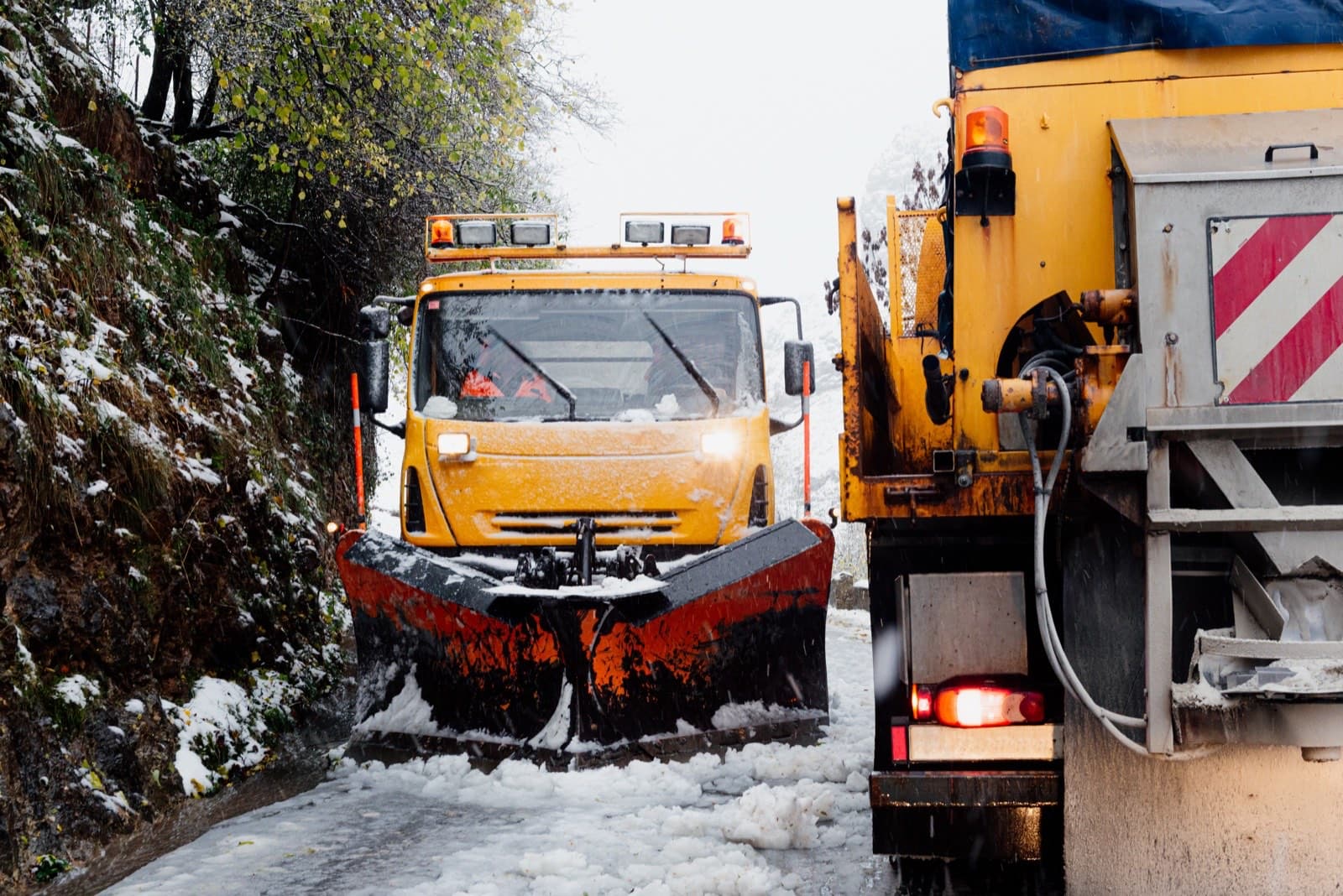
Liability for black-ice accidents without winter maintenance
Read more
Spielplatzkontrolle in Wohnanlagen: Pflichten, Intervalle, Dokumentation
Read more
Treppenhaus als Fluchtweg: Was darf dort stehen — und was nicht?
Read more
Müll im Mehrfamilienhaus: Was Fehlwürfe wirklich kosten
Read more
Stairwell cleaning: cycle, checklist, who is responsible?
Read more
Caretaker service vs. individual firms — what makes sense for managing agents?
Read more
Routine cleaning or deep cleaning? The difference — and how often each is needed
Read moreLet us talk about your property.
Tell us what you need — we usually reply within one working day with a quote, free and without obligation.
- 1


Send an enquiry
Through the contact form, by phone, WhatsApp or email — whichever suits you best.
- 2


Arrange a visit
We get back to you promptly and, where useful, arrange a visit on site that fits your schedule.
- 3


Receive a free quote
You get a transparent quote with no obligation — no hidden costs, no small print.
- 4


You decide
No pressure and no lengthy commitment: take your time to decide whether it is a good fit.