
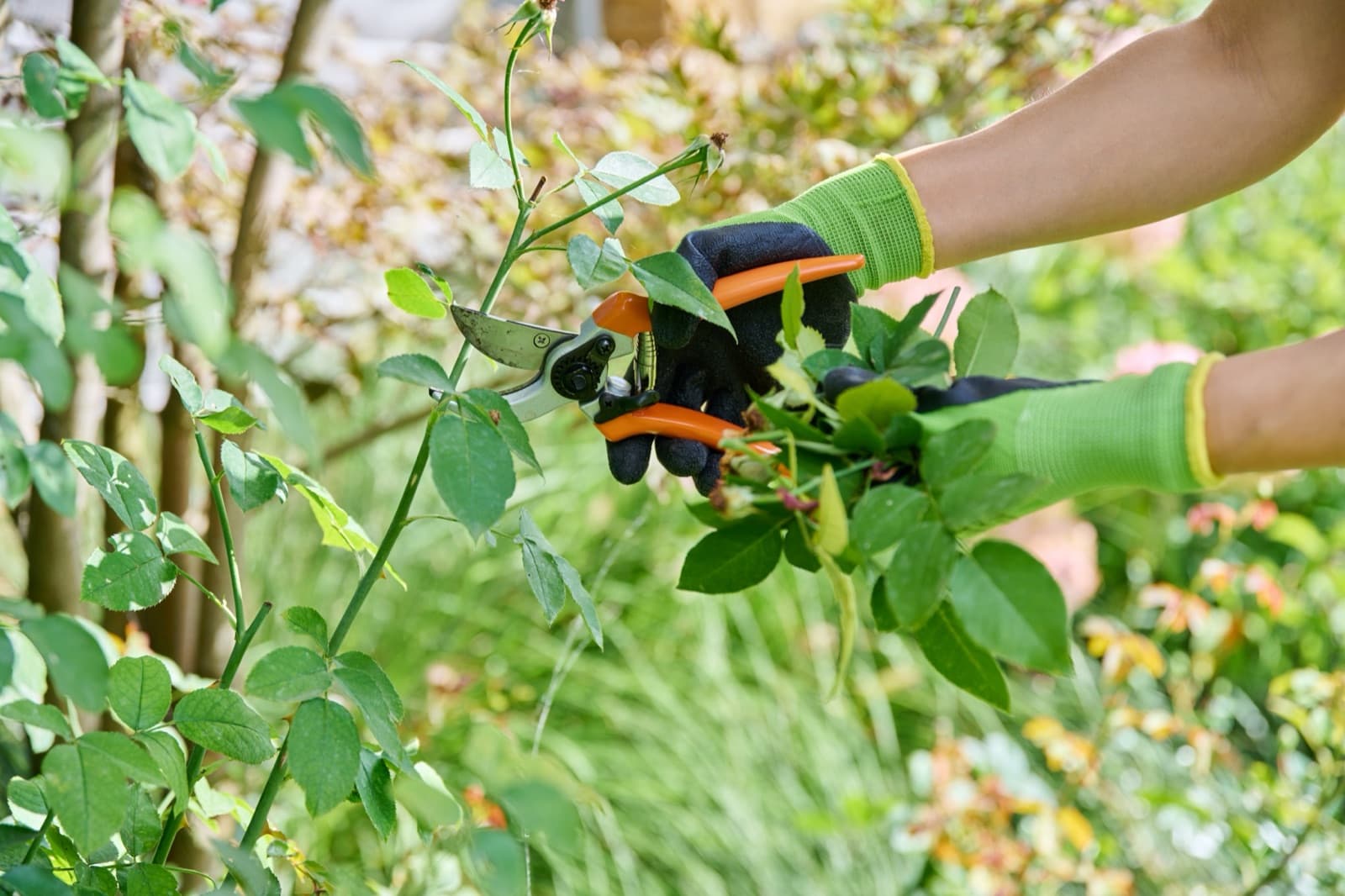
Felling a tree on your property: when is it allowed?
Felling season from October to February, tree protection by-laws, decisions in owners' associations and the duty to maintain safety: what to check before felling.
A tree on the property has grown too big, stands too close to the house or is diseased — may it be removed? And if so, when? For owners, owners’ associations and property managers this is one of the most common questions in autumn. The short answer: the window for felling is open from 1 October to the end of February — but whether a tree may be felled at all is not decided by the calendar alone.
The nationwide rule: § 39 Federal Nature Conservation Act
From 1 March to 30 September it is prohibited to cut back, coppice or remove trees outside forests as well as hedges, shrubs and other woody plants (§ 39 (5) sentence 1 no. 2 BNatSchG). The purpose is to protect nesting birds and other animals. Areas used as gardens are among the exceptions.
Even during the protected period, gentle shaping and maintenance cuts that remove new growth or keep a tree healthy remain permitted. The ban also does not apply to measures that serve traffic safety and cannot be carried out at another time — such as a broken branch above the footpath.
The same periods apply to hedges; the details are in Hedge cutting: statutory periods. This article is about trees.
The local rule: tree protection by-law
Regardless of the season, a municipal tree protection by-law (Baumschutzsatzung) can make felling subject to a permit — usually from a certain trunk circumference measured at a set height above the ground. Whether such a by-law exists, which trees it covers and whether replacement planting is required differs from municipality to municipality. Felling without a required permit risks a fine.
Check before every felling
- Is the date between 1 October and 28/29 February?
- Does the municipality have a tree protection by-law, and is the tree covered? (Ask the public order or environment office.)
- Are birds nesting or bats living in the tree? Then care is needed even in winter.
- Is the tree on the boundary or on common property? Then clarify responsibility first.
Who decides in an owners’ association?
Trees on the shared plot are common property. Felling a healthy tree is usually not a minor matter the manager can decide alone, but one for the owners (§ 19 (1) WEG). It is different when there is acute danger: the manager may take measures to avert a disadvantage without a prior resolution (§ 27 (1) WEG).
Duty to maintain safety: look at trees regularly
Whoever has a tree on their property must make sure it poses no avoidable danger — to passers-by, parked cars and residents. If a rotten branch falls, this can lead to liability under § 823 BGB. A proven approach is to check trees regularly for deadwood, cracks, fungal growth and leaning, to record the result and to have anything unusual assessed by a specialist.
How Zamsa helps
As part of our grounds maintenance we carry out hedge and woody-plant cutting within the permitted period and keep an eye on trees during our regular visits. Anything we notice about a tree is reported to you or the property manager — felling large trees and tree surveys belong in the hands of specialist firms.
Not legal or tax advice
This article gives a general overview and is no substitute for individual legal or tax advice. Laws, deadlines and responsibilities can change and may differ in an individual case. For a binding assessment of your particular situation, please consult a solicitor or tax adviser, or the relevant authority.
You might also find this useful.
Spielplatzkontrolle in Wohnanlagen: Pflichten, Intervalle, Dokumentation
Read more
Planning your lawn care schedule (spring to autumn)
Read more
Hedge cutting deadlines: what is legally allowed between March and September
Read more
Growth over pavement and road: when owners have to cut back
Read more
Leaves in autumn: who is responsible — and who is liable if someone falls?
Read more
Impregnating paving after stone cleaning: is it worth it?
Read more
Cleaning gutters: how often, who is responsible and who pays?
Read more
Window cleaning in apartment buildings: who cleans, who pays?
Read moreLet us talk about your property.
Tell us what you need — we usually reply within one working day with a quote, free and without obligation.
 Send an enquiryThrough the contact form, by phone, WhatsApp or email — whichever suits you best.
 2Arrange a visitWe get back to you promptly and, where useful, arrange a visit on site that fits your schedule.
 3Receive a free quoteYou get a transparent quote with no obligation — no hidden costs, no small print.
 4You decideNo pressure and no lengthy commitment: take your time to decide whether it is a good fit.