
Window cleaning in apartment buildings: who cleans, who pays?
Flat windows, stairwell windows, hard-to-reach glass: who is responsible in an apartment building and which costs may be passed on.
Who actually cleans the windows in the stairwell? And who cleans the large glass areas you cannot reach from inside the flat? In apartment buildings this question regularly leads to discussions — between tenants, landlords and owners’ associations. Yet it can usually be answered clearly by distinguishing three kinds of windows.
1. The windows of your own flat
Windows that belong to the flat and can be opened and cleaned safely from inside are cleaned by the tenant — inside and out. That is part of the normal care of the rented property. They are not passed on through the service charges, because cleaning your own flat is not an operating cost.
2. Windows in shared areas
Windows in the stairwell, corridors, basement or laundry room belong to the parts of the building used jointly by the residents. Cleaning them counts as building cleaning under § 2 No. 9 BetrKV — the ordinance expressly names cleaning the parts of the building used jointly by residents, such as access ways, corridors and stairs. If the landlord has a service provider do it, the costs can be passed on to the tenants, provided the tenancy agreement allows for it (§ 556 (1) BGB).
Alternatively, the house rules can assign stairwell cleaning to the tenants in rotation. How well that works usually shows in exactly these windows: they are the first thing forgotten. More in Stairwell cleaning: cycle and checklist.
3. Glass you cannot reach safely
Large fixed glazing, skylights, glass roofs or windows that do not open: here the situation is more difficult. Nobody is obliged to put themselves in danger to clean windows. What can only be reached with a ladder, aerial platform or rope access is in practice usually commissioned by the landlord or the association. Whether and how these costs may be passed on depends on the individual case and the tenancy agreement — if in doubt, it is worth checking current case law or taking advice.
How to avoid disputes
- Set out clearly in the tenancy agreement or house rules who cleans which windows
- Include shared areas and hard-to-reach glass in the cleaning contract
- Fix the cycle — e.g. stairwell windows several times a year, not “as needed”
- Document the cleaning so the service-charge statement can be verified
How often should stairwell windows be cleaned?
There is no legal requirement. In practice, two to four cleanings a year have proven themselves for stairwell windows — more often if the building is on a busy road or there is a lot of leaf litter and pollen. One date in spring and one in autumn makes sense.
In an owners’ association
Stairwell windows and shared glass areas are common property. How often and by whom they are cleaned is set by the owners by resolution or through the cleaning contract (§ 19 (1) WEG). Each owner, or their tenant, cleans the windows of the individual flat.
How Zamsa helps
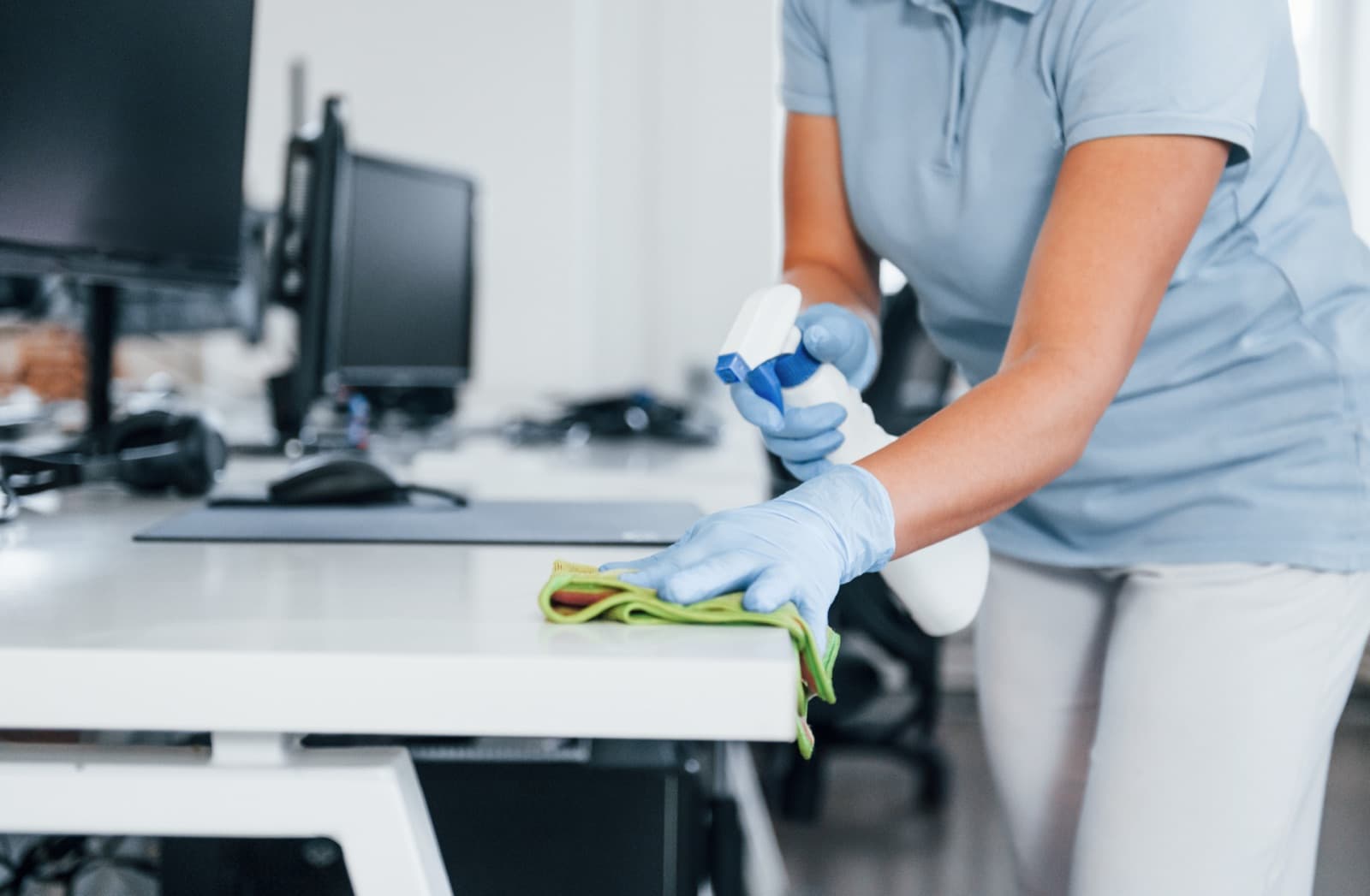
Windows and window sills in the stairwell and shared rooms are a fixed part of our building cleaning — in the agreed cycle and with a report for every visit, so the service-charge statement can be backed up towards tenants.
Not legal or tax advice
This article gives a general overview and is no substitute for individual legal or tax advice. Laws, deadlines and responsibilities can change and may differ in an individual case. For a binding assessment of your particular situation, please consult a solicitor or tax adviser, or the relevant authority.
You might also find this useful.

What does a caretaker service cost? The five price factors
Read more
Commissioning office cleaning: specification and cleaning cycle
Read more
Treppenhaus als Fluchtweg: Was darf dort stehen — und was nicht?
Read more
Stairwell cleaning: cycle, checklist, who is responsible?
Read more
Caretaker service vs. individual firms — what makes sense for managing agents?
Read more
Routine cleaning or deep cleaning? The difference — and how often each is needed
Read more
What may a caretaker do – and what not? Powers and limits in everyday practice
Read more
Property inspections: why regular checks prevent consequential damage
Read moreLet us talk about your property.
Tell us what you need — we usually reply within one working day with a quote, free and without obligation.
 Send an enquiryThrough the contact form, by phone, WhatsApp or email — whichever suits you best.
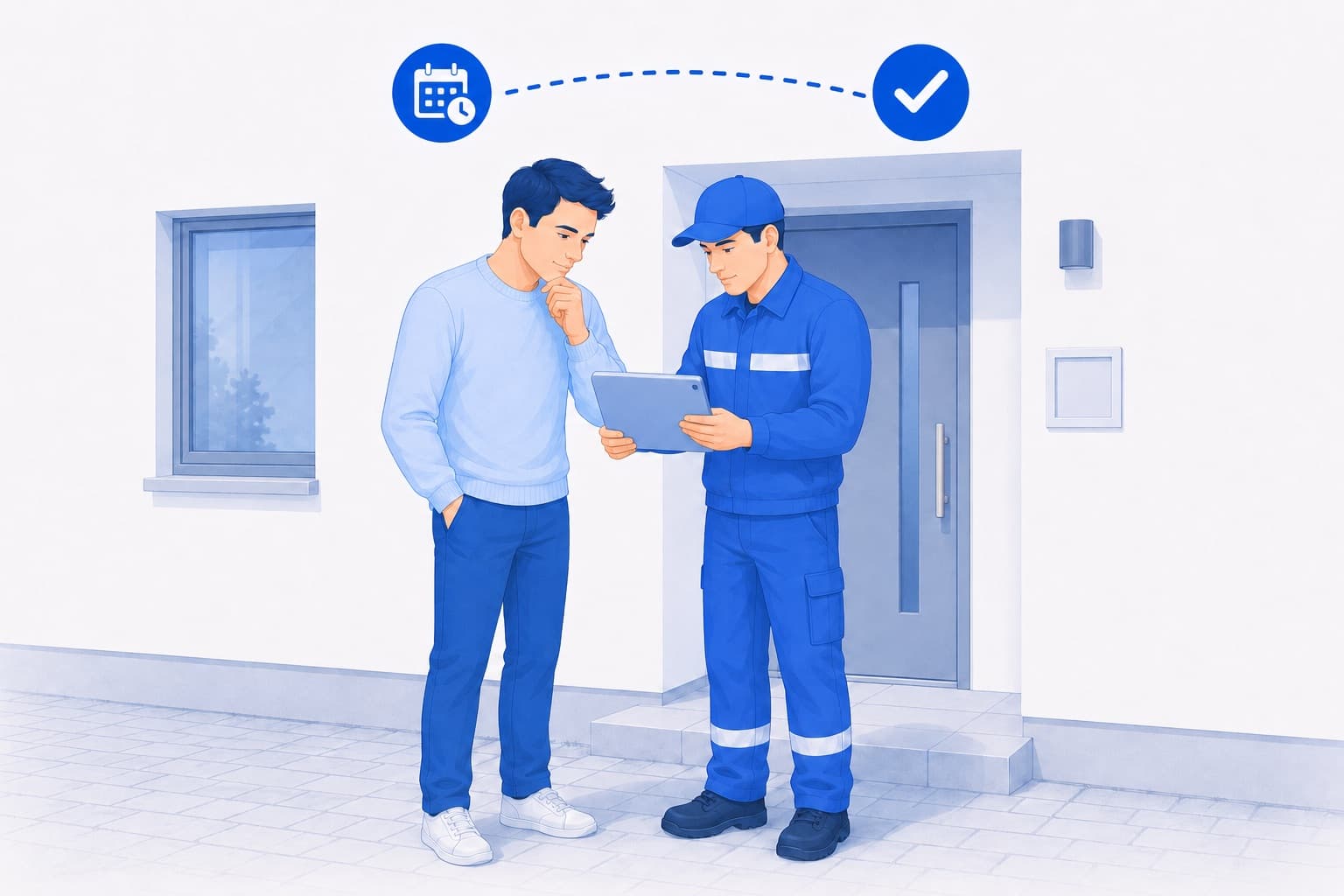 2Arrange a visitWe get back to you promptly and, where useful, arrange a visit on site that fits your schedule.
 3Receive a free quoteYou get a transparent quote with no obligation — no hidden costs, no small print.
 4You decideNo pressure and no lengthy commitment: take your time to decide whether it is a good fit.