

Road salt, grit or granules: what is allowed on the footpath?
What the by-laws in Darmstadt, Groß-Gerau, Riedstadt, Neu-Isenburg and Oberursel say about gritting, which material is good for what and what happens to the grit after the winter.
The first icy morning tends to end in front of a shelf at the DIY store: road salt, grit, sand or granules. What are you actually allowed to put on the footpath? The short answer: none of the five towns whose by-laws we read bans salt outright. But everywhere it comes second and is only allowed with restrictions. Here is what the by-laws in Darmstadt, Groß-Gerau, Riedstadt, Neu-Isenburg and Oberursel say, which material is good for what, and what happens to the grit after the winter.
Is road salt banned in Hesse?
Not across the board. In Hesse, each municipality decides what may be spread, in its street cleaning by-law (Straßenreinigungssatzung). It is the same by-law that passes the clearing and gritting duty on to property owners and sets the times and widths. What counts is therefore always the by-law of your own municipality. How the duty itself works and who carries it is explained in our article The clearing and gritting duty in Hesse.
The gritting materials at a glance
- Sand and grit are abrasive: they do not melt the ice, but they make it grippy. In all five by-laws they are the first choice. The downside: they stay where they are and have to be swept up again after the thaw.
- Road salt melts ice and snow and works quickly. The German Environment Agency (Umweltbundesamt) describes the consequences: salt builds up in roadside soil over the years. Street trees such as maple, lime and horse chestnut are particularly sensitive. Via the sewage treatment plant, the salt ends up in streams and rivers. For dogs, walking for longer on salted ground can inflame their paws. And concrete suffers because salt attacks the reinforcing steel inside it.
- Granules is a catch-all term, and that is exactly the trap. There are salt-free, abrasive granules. The Environment Agency recommends them alongside sand and grit; you can recognise them by the Blue Angel label for “environmentally friendly salt-free, abrasive gritting materials” (DE-UZ 13). But there are also de-icing granules that melt ice just like salt. The by-laws treat such products just as strictly: Darmstadt puts urea, ammonium salts and phosphates on the same footing as salt, Oberursel speaks of “salt and chemicals”, and Neu-Isenburg only allows de-icing granules in small amounts at hydrants and manhole covers.
- Ash is expressly banned in Neu-Isenburg. The other four by-laws do not mention it.
Check the bag
If the bag says “auftauend” (de-icing) or “Taumittel”, treat the contents like salt, even if it is called “granules”. According to the Environment Agency, salt-free abrasive products can be recognised by the Blue Angel.
What the by-laws in five towns say
We read the versions the towns themselves publish as of October 2026. Some of them are fairly old. By-laws can change, so before the winter check your municipality’s website for a newer version.
- Darmstadt: salt only in black ice or freezing rain. The same applies to urea, ammonium salts and phosphates. On footpaths with trees or an adjoining green verge, and closer than ten metres to a body of water, salt and other de-icing agents must not be stored. Residues must be removed after the thaw by the end of the following day. (By-law last amended in 2025, in force since 1 January 2026)
- Groß-Gerau: mainly sand, grit and similar abrasive material. Salt only in small amounts to remove trodden-down ice and snow. Residues to be removed at the latest after the frost period. (Consolidated version, as of 2010)
- Riedstadt: the same rule as in Groß-Gerau, almost word for word: salt only in small amounts against trodden-down ice and snow, residues to be removed at the latest after the frost period. (Version from 2001)
- Neu-Isenburg: salt, and grit mixed with salt, only where unavoidable and in small amounts. Ash is banned. De-icing granules only in small amounts at hydrants, manhole covers, valve covers and standpipes. Residues to be removed as soon as possible. (Version from 2002)
- Oberursel (Taunus): salt and chemicals only in small amounts against trodden-down ice and snow. No salt at all in the root area of trees and shrubs. Snow mixed with salt does not belong on tree pits or green areas. Residues to be removed immediately after the thaw. (Version from 2005)
Steps and ramps
None of the five by-laws has a separate rule for steps, ramps or steep paths. If you think more than grit is needed in such places, it is best to ask your municipality.
What does “small amounts” mean?
None of the five by-laws gives a figure in grams. The direction follows from the wording, though: there, salt is the exception for trodden-down ice and snow (Groß-Gerau, Riedstadt, Oberursel), for unavoidable cases (Neu-Isenburg) or for black ice and freezing rain (Darmstadt). It is not what you treat the whole footpath with.
After the winter: collect the grit again
Grit does not melt away. All five by-laws require the residues to be removed; only the deadlines differ: in Oberursel immediately after the thaw, in Darmstadt by the end of the following day, in Neu-Isenburg as soon as possible, in Groß-Gerau and Riedstadt at the latest after the frost period.
The Environment Agency advises sweeping up the grit after the snow has melted and using it again at the next snowfall. Leaving it lying has consequences: a study commissioned by the Environment Agency names more waste from the gully pots of street drains as a downside of grit. That study looked at carriageways, though, not footpaths. What else is due in spring is in our checklist Spring check for the common property.
Grit in Darmstadt
In winter 2025/26 the municipal waste company EAD handed out small amounts of grit free of charge at its recycling centre at Sensfelderweg 33, up to 20 litres. Whether this applies again this winter is stated in the city’s winter service announcements.
How Zamsa grits
We spread with a spreader so that the result is one continuous track. As our material we mostly use a mixture of grit and crushed stone. We only add de-icing salt on particularly cold days or where ice has frozen solid, and only where the by-law allows it. Every job is documented in the customer portal. More on the winter maintenance page.
With our winter maintenance calculator you get a realistic price estimate for your property in a few clicks.Calculate now →Sources
- Darmstadt – street cleaning by-law (local law 715), in force from 01.01.2026 (German)
- City of Darmstadt – press release on winter service, 11.11.2025 (German)
- Groß-Gerau – street cleaning by-law (German)
- Riedstadt – street cleaning by-law (German)
- Neu-Isenburg – street cleaning by-law, version held by DLB (German)
- Oberursel (Taunus) – street cleaning by-law (German)
- German Environment Agency – gritting materials and road salt (German)
- Blue Angel – salt-free, abrasive gritting materials, DE-UZ 13 (German)
- Öko-Institut – press release on the road salt and grit study, 22.01.2003 (German)
Not legal or tax advice
This article gives a general overview and is no substitute for individual legal or tax advice. Laws, deadlines and responsibilities can change and may differ in an individual case. For a binding assessment of your particular situation, please consult a solicitor or tax adviser, or the relevant authority.
You might also find this useful.

Roof avalanches and icicles: when is the owner liable?
Read more
The clearing and gritting duty in Hesse — what owners and landlords need to know
Read more
Winter maintenance costs: what does the price depend on — and how do you save?
Read more
Liability for black-ice accidents without winter maintenance
Read more
Impregnating paving after stone cleaning: is it worth it?
Read more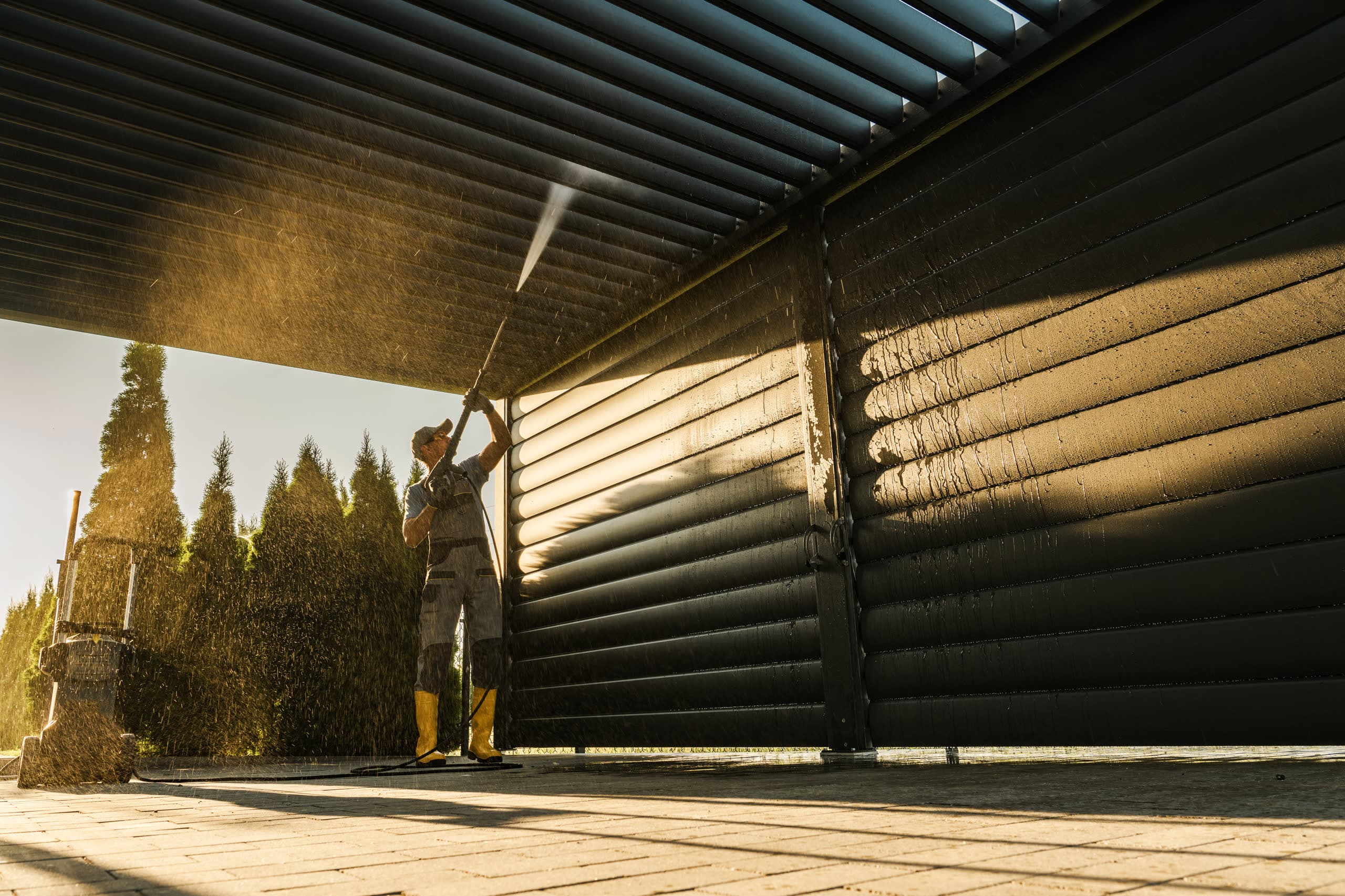
Cleaning gutters: how often, who is responsible and who pays?
Read more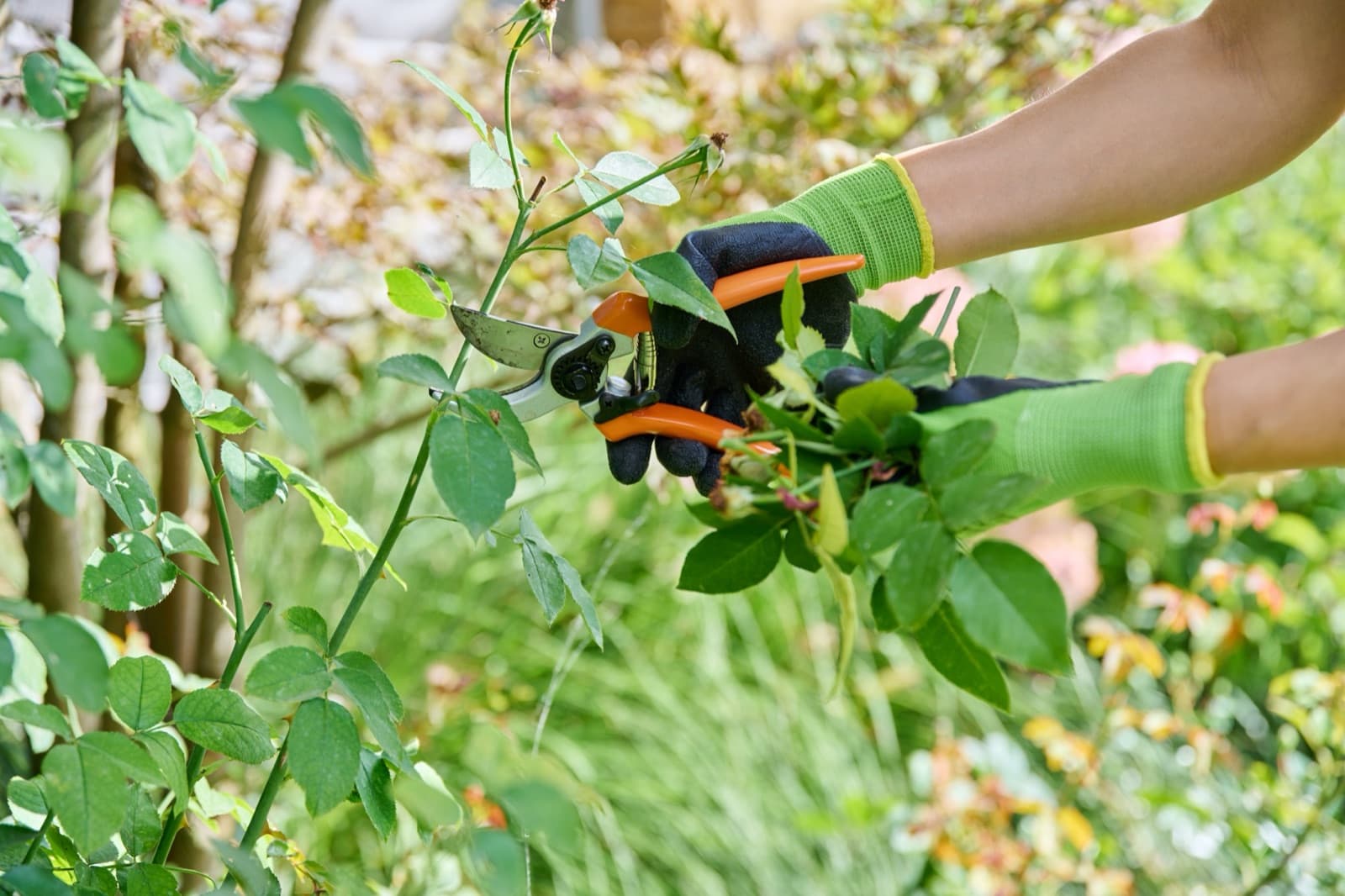
Felling a tree on your property: when is it allowed?
Read more
Window cleaning in apartment buildings: who cleans, who pays?
Read moreLet us talk about your property.
Tell us what you need — we usually reply within one working day with a quote, free and without obligation.
 Send an enquiryThrough the contact form, by phone, WhatsApp or email — whichever suits you best.
 2Arrange a visitWe get back to you promptly and, where useful, arrange a visit on site that fits your schedule.
 3Receive a free quoteYou get a transparent quote with no obligation — no hidden costs, no small print.
 4You decideNo pressure and no lengthy commitment: take your time to decide whether it is a good fit.