
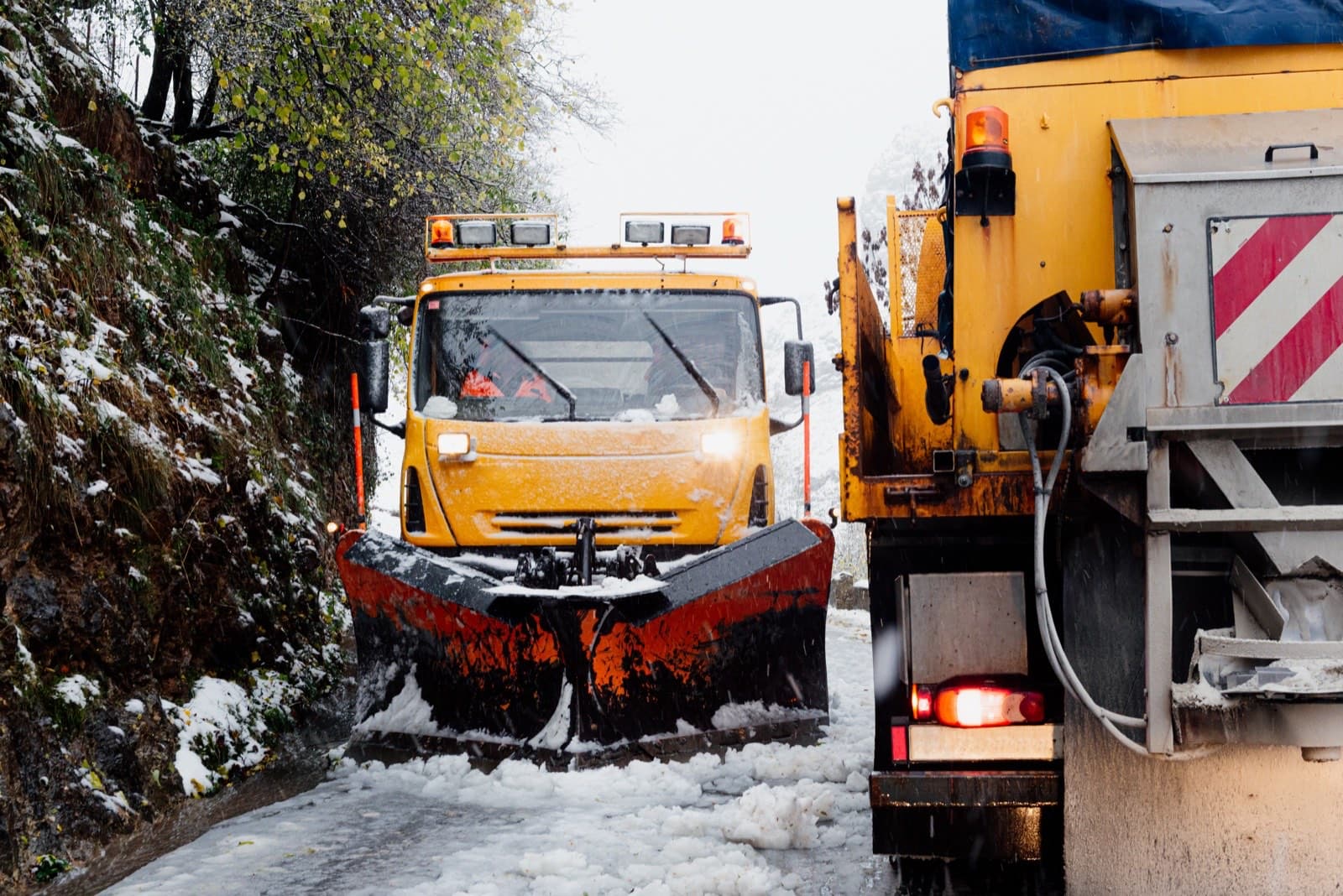
Liability for black-ice accidents without winter maintenance
A fall on an icy footpath happens in a moment — and for whoever carries the clearing and gritting duty it can turn out expensive. What happens legally when somebody slips outside your door, and how to protect yourself if it ever comes to that.
Who is liable, exactly?
If a person is injured by ice on a footpath that has not been properly cleared or gritted, they can bring a claim against whoever was under the duty to keep the way safe at the time of the accident. That may be the owner, a tenant to whom the duty was transferred by contract, or a winter maintenance contractor who has been engaged. The basis for a claim in damages is § 823 BGB, and for compensation for pain and suffering § 253 Abs. 2 BGB applies on top of it — provided a breach of duty can be proven against the person responsible. The term “Verkehrssicherungspflicht” (the duty to keep the way safe) does not itself appear in those words in the statute: it is a category of case law developed around § 823 Abs. 1 BGB and settled for decades.
What exactly does the injured party have to prove?
- That there really was ice or snow at the time of the accident, triggering a duty to clear.
- That clearing or gritting was inadequate (e.g. not done at all, done too late, or only in part).
- That the fall was actually caused by that failure to clear.
Where that is established, prima facie evidence (Anscheinsbeweis) points to a breach of the clearing and gritting duty — and it is then for the person under the gritting duty to rebut that appearance. In practice this is often exactly where the argument lies: without witnesses or documentation it is frequently one person's word against another's. Anyone who can show when and how clearing was done is in a much better position.
Practical tip
A professional winter maintenance contractor documents every call-out with a time and a photo — in the Zamsa customer portal that is automatically traceable for every visit. In a dispute that is far stronger evidence than a handwritten note, or than no documentation at all.
What if I have engaged a winter maintenance contractor?
Since a BGH ruling of August 2025 (Az. VIII ZR 250/23), a distinction has to be drawn here as to whom the liability is owed:
- Towards those with a contractual link(e.g. a landlord towards a tenant, a WEG (residents' association) towards its residents): the BGH held that the client is fully answerable under § 278 BGB for mistakes made by the contractor engaged — regardless of how carefully that contractor was selected and supervised. In this relationship, careful selection therefore no longer protects you from liability of your own.
- Towards third parties with no contractual relationship (e.g. passers-by): here it remains the case that careful selection and supervision of the contractor can release you from liability of your own — except where the selection or the supervision was grossly negligent.
For landlords and residents' associations that means: engaging a contractor still offers protection towards outside third parties, but towards your own tenants or residents careful selection no longer shields you — you are answerable for the contractor's mistakes in any case. That makes complete documentation all the more important, because it is what shows in a dispute whether there was any failing at all. For the basics of the clearing and gritting duty itself, see our article The clearing and gritting duty in Hesse.
In summary
The biggest risk lies not in the winter maintenance itself but in the lack of documentation. A complete, verifiable record of every call-out is the simplest way to protect yourself in a dispute — and that is exactly what our customer portal is built for.
How Zamsa helps
Our winter maintenance service records every call-out with a time and a photo. So in a dispute you do not have to reconstruct when clearing and gritting were last done — the evidence is ready and waiting in the customer portal.
Sources
- § 823 BGB – liability in damages
- § 253 Abs. 2 BGB – compensation for pain and suffering
- § 278 BGB – responsibility for persons used to perform an obligation
- Haufe: BGH ruling of 06.08.2025, Az. VIII ZR 250/23 on landlord liability where winter maintenance is contracted out
- How the burden of proof is allocated in black-ice accidents (ra-kotz.de)
Not legal or tax advice
This article gives a general overview and is no substitute for individual legal or tax advice. Laws, deadlines and responsibilities can change and may differ in an individual case. For a binding assessment of your particular situation, please consult a solicitor or tax adviser, or the relevant authority.
You might also find this useful.

The clearing and gritting duty in Hesse — what owners and landlords need to know
Read more
Winter maintenance costs: what does the price depend on — and how do you save?
Read more
Spielplatzkontrolle in Wohnanlagen: Pflichten, Intervalle, Dokumentation
Read more
Treppenhaus als Fluchtweg: Was darf dort stehen — und was nicht?
Read more
Müll im Mehrfamilienhaus: Was Fehlwürfe wirklich kosten
Read more
Stairwell cleaning: cycle, checklist, who is responsible?
Read more
Caretaker service vs. individual firms — what makes sense for managing agents?
Read more
Routine cleaning or deep cleaning? The difference — and how often each is needed
Read moreLet us talk about your property.
Tell us what you need — we usually reply within one working day with a quote, free and without obligation.
- 1


Send an enquiry
Through the contact form, by phone, WhatsApp or email — whichever suits you best.
- 2

Arrange a visit
We get back to you promptly and, where useful, arrange a visit on site that fits your schedule.
- 3


Receive a free quote
You get a transparent quote with no obligation — no hidden costs, no small print.
- 4


You decide
No pressure and no lengthy commitment: take your time to decide whether it is a good fit.