

Passing on service charges correctly: what is permitted for caretaker, cleaning and garden maintenance costs
Caretaker, cleaning and garden maintenance costs are among the items most often queried in a service charge statement — and among those where objections are easiest to avoid. Here is an overview of what the German operating costs regulation (Betriebskostenverordnung, BetrKV) actually lays down, where the typical sources of error lie, and what that means for the way a service contract should be drawn up.
The three relevant types of cost at a glance
§ 2 BetrKV lists the types of cost that can be passed on as service charges (Betriebskosten). Numbers 1 to 16 each name specific items; number 17 additionally allows “other operating costs”, but these can only be passed on if they have been expressly named in the contract. Three items above all are relevant for looking after a property:
- § 2 Nr. 9 — costs of building cleaning and pest control
- § 2 Nr. 10 — costs of garden maintenance
- § 2 Nr. 14 — costs for the caretaker (Hauswart)
Two things have to be kept apart here. In a tenancy, passing costs on is only permissible if it has been agreed at all — § 556 Abs. 1 BGB requires a corresponding provision in the tenancy agreement; the BetrKV only says which costs may be considered for it. Within a residents' association, by contrast, § 16 Abs. 2 WEG applies first: each owner bears the costs in proportion to their co-ownership share, as long as the association has not resolved otherwise for individual types of cost. The BetrKV catalogue becomes relevant for a residents' association when an owner who lets their flat passes their share on to the tenants.
Garden maintenance — only where maintenance actually takes place
Number 10 covers more than the term “garden maintenance” suggests. What can be passed on is the cost of maintaining areas laid out as gardens, including the replacement of plants and shrubs, the maintenance of playgrounds including the replacement of sand, and the maintenance of yards, accesses and driveways that serve non-public traffic. So the yard path and the access to the bin store are included — the public road in front of the property is not; cleaning that belongs to number 8.
Two limits follow directly from the wording. First, “maintenance of areas laid out as gardens” presupposes that the area has already been laid out: replacing existing plants is expressly covered, laying out an area for the first time is not maintenance. Second, these are the costs of maintenance — so maintenance must actually have been carried out. A flat-rate “garden maintenance” item with no service behind it has no basis; in a dispute, what counts is what the invoices and the records of work show.
Caretaker — with one important restriction
Under number 14, the remuneration, the social security contributions and all benefits with a monetary value that the owner or the holder of a heritable building right grants the caretaker for their work can be passed on — but only in so far as this does not concern maintenance, repair, replacement, decorative repairs or the management of the property. So if the caretaker repairs a faulty door, that share of their work cannot be passed on, even though it was carried out in the same hour as work that can be.
The second half of the provision is particularly relevant in practice: in so far as work is carried out by the caretaker, the costs of that labour may not additionally be claimed under numbers 2 to 10 and 16. If the caretaker mows the lawn, the same work must not appear a second time under number 10 as garden maintenance; if they mop the stairwell, not a second time under number 9 as building cleaning. This is exactly where the double charges arise that are the first thing to stand out in an audit — usually not deliberately, but because a flat-rate caretaker invoice does not show which portions relate to what.
Building cleaning — traceable or not at all
Number 9 covers the cleaning of the parts of the building used jointly by the residents: accesses, hallways, stairs, cellars, loft spaces, laundry rooms, the lift car. The flat itself is naturally not part of it. The BetrKV lays down nothing about the extent or the frequency — what is appropriate depends on the property; more on this in our article Stairwell cleaning: cycle, checklist, who is responsible?.
The amount is not open-ended either: under § 556 Abs. 3 Satz 1 BGB the principle of economy has to be observed in the statement. And the statement has to be verifiable — every residential property owner can demand inspection of the management records under § 18 Abs. 4 WEG, and tenants have a corresponding right to inspect the supporting documents held by the landlord. If you cannot back an item up with an invoice and a record of the work done, you will probably not be able to hold on to it.
Keeping an eye on the deadlines
For tenancies, § 556 Abs. 3 BGB sets a hard limit: the statement has to reach the tenant no later than the end of the twelfth month after the end of the accounting period — after that, additional claims are excluded unless the landlord is not responsible for the delay. Conversely, the tenant has to raise objections within twelve months of receiving the statement. If you only gather your records of work together once there is a dispute, this is exactly where you lose time.
What this means for a clean statement
The most important practical consequence concerns not the statement but the contract that comes before it: cleaning, garden and caretaker services should be shown separately from the outset — described separately, priced separately, invoiced separately. That brings several things with it:
- The allocation to numbers 9, 10 and 14 follows from the invoice itself, instead of having to be estimated at the end of the year.
- Double charges between the caretaker and the remaining items show up when the invoice is booked, and not only at the document inspection.
- Portions that cannot be passed on — repair, replacement, decorative repairs — can be kept cleanly out of it. For landlords they are not lost as a result: they can still be claimed as income-related expenses (Werbungskosten), as our article Claiming caretaker service & winter maintenance against tax shows.
- The recurring share can be separated from one-off measures — the difference between ongoing care and a one-off overhaul is explained in Routine cleaning or deep cleaning?
In a residents' association it is usually the managing agent who concludes this contract — how much scope they have had since the WEG reform is set out in The WEG reform since 2020.
Practical tip
Make sure the records of work are documented separately by type of cost from the very beginning — date, time and the work carried out for each type of service. That saves sorting everything out at the end of the year and turns a document inspection into a matter of minutes rather than days.
How Zamsa helps
We show cleaning, grounds maintenance and caretaker work separately in the quote and on the invoice, so that the allocation to the items of the BetrKV does not have to be reconstructed after the event. Every visit is documented in the customer portal with the date, the time and the work carried out — so if documents are inspected, the evidence is already there. What belongs to each of the areas is set out on our building cleaning and grounds maintenance pages.
Statement coming up? We break the quote and the invoice down by type of service.Kontakt aufnehmen →This article gives a general overview of § 2 BetrKV and does not replace tax or legal advice in an individual case. For specific questions about a statement, it is worth going through them with your tax adviser or with a lawyer specialising in tenancy and residential property law.
Sources
Not legal or tax advice
This article gives a general overview and is no substitute for individual legal or tax advice. Laws, deadlines and responsibilities can change and may differ in an individual case. For a binding assessment of your particular situation, please consult a solicitor or tax adviser, or the relevant authority.
You might also find this useful.
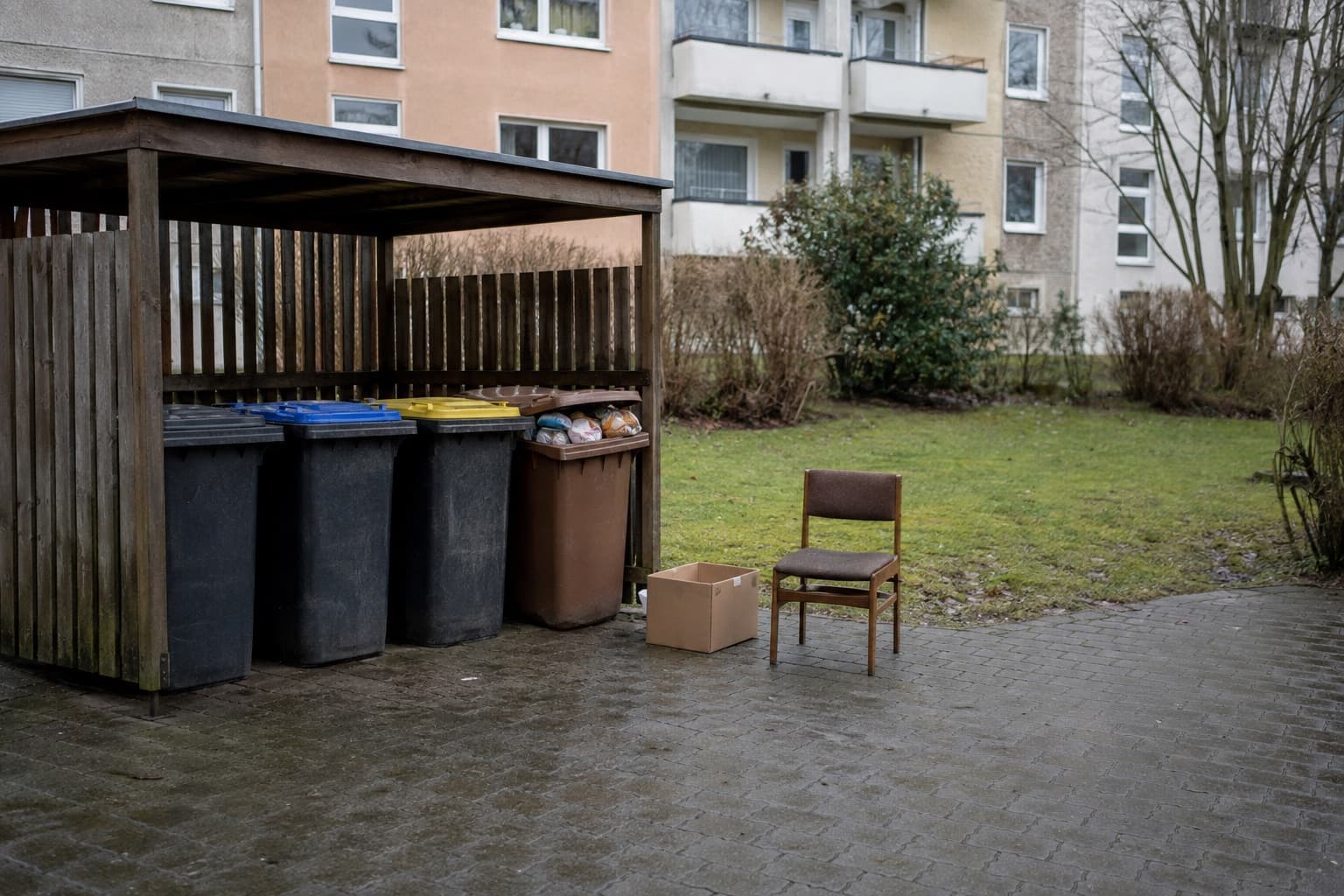
Müll im Mehrfamilienhaus: Was Fehlwürfe wirklich kosten
Read more
Cancellable monthly vs. an annual contract — what is standard for caretaker services?
Read more
Checklist: getting your property ready for winter
Read more
Claiming caretaker service and winter maintenance against tax — what landlords should know
Read more
Changing your caretaker service: an 8-point checklist for a smooth transition
Read more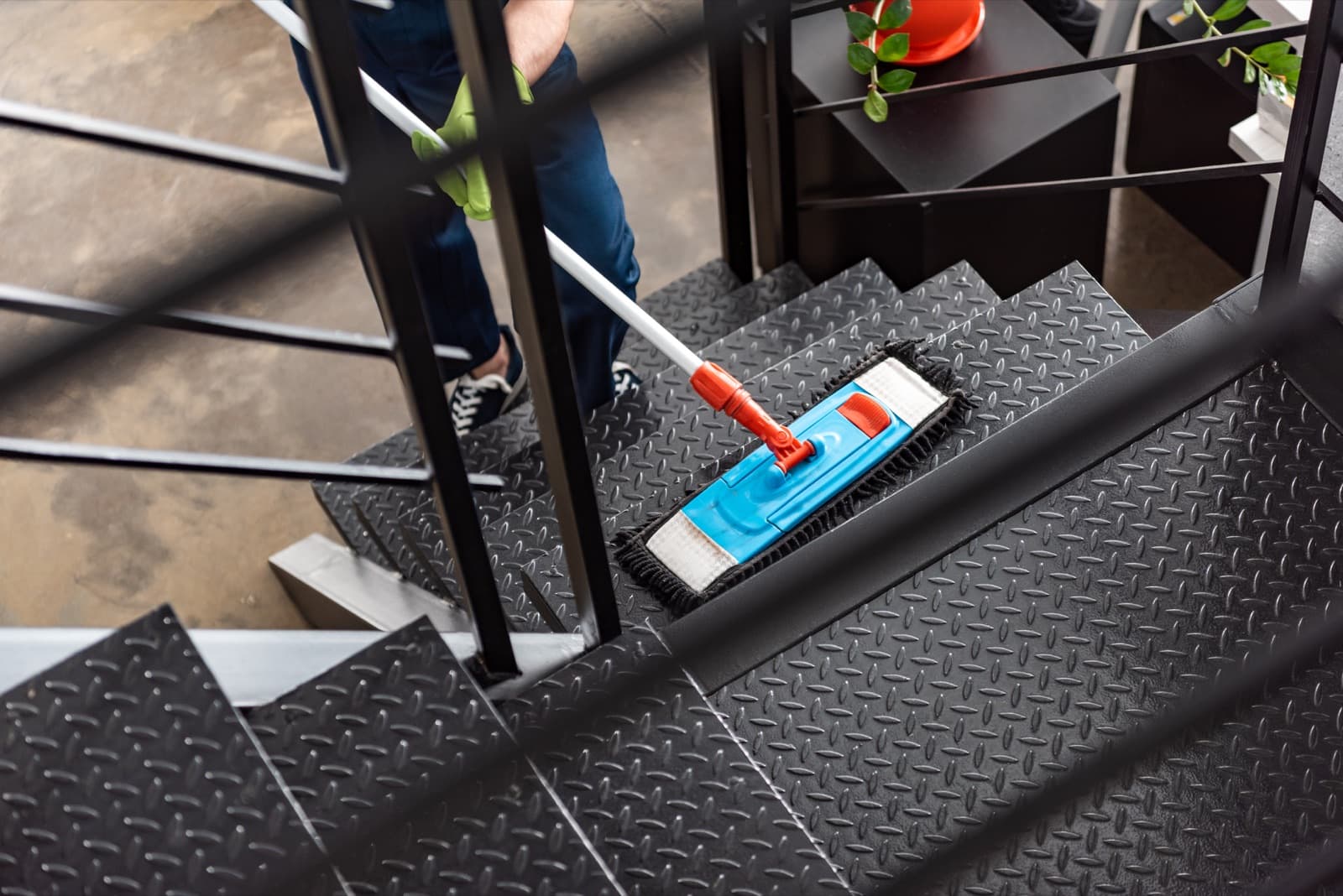
The WEG reform since 2020: what has changed for commissioning caretaker and cleaning services
Read more
Spring check for the common property: the checklist for after the winter
Read more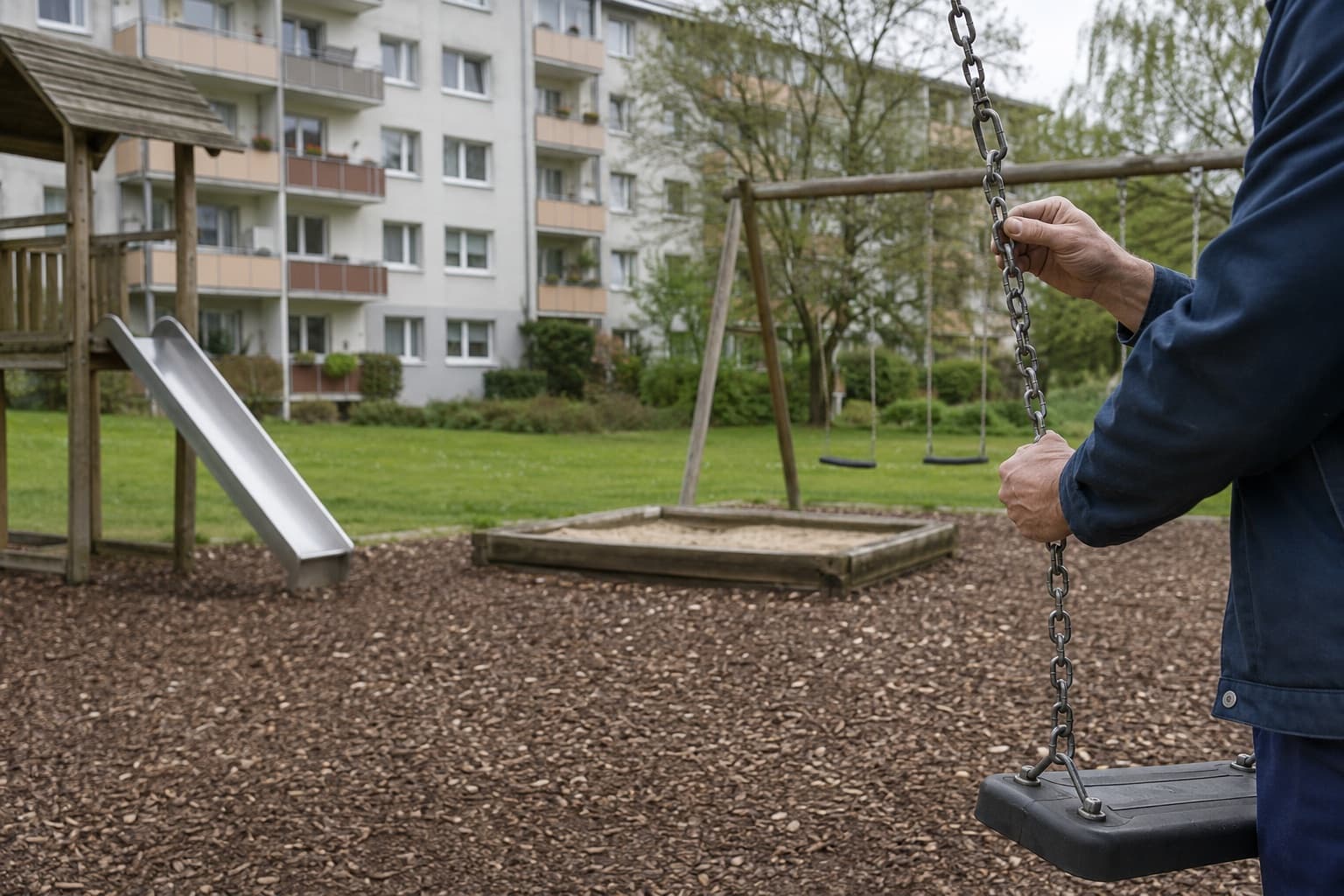
Spielplatzkontrolle in Wohnanlagen: Pflichten, Intervalle, Dokumentation
Read moreLet us talk about your property.
Tell us what you need — we usually reply within one working day with a quote, free and without obligation.
- 1


Send an enquiry
Through the contact form, by phone, WhatsApp or email — whichever suits you best.
- 2
Arrange a visit
We get back to you promptly and, where useful, arrange a visit on site that fits your schedule.
- 3


Receive a free quote
You get a transparent quote with no obligation — no hidden costs, no small print.
- 4


You decide
No pressure and no lengthy commitment: take your time to decide whether it is a good fit.