
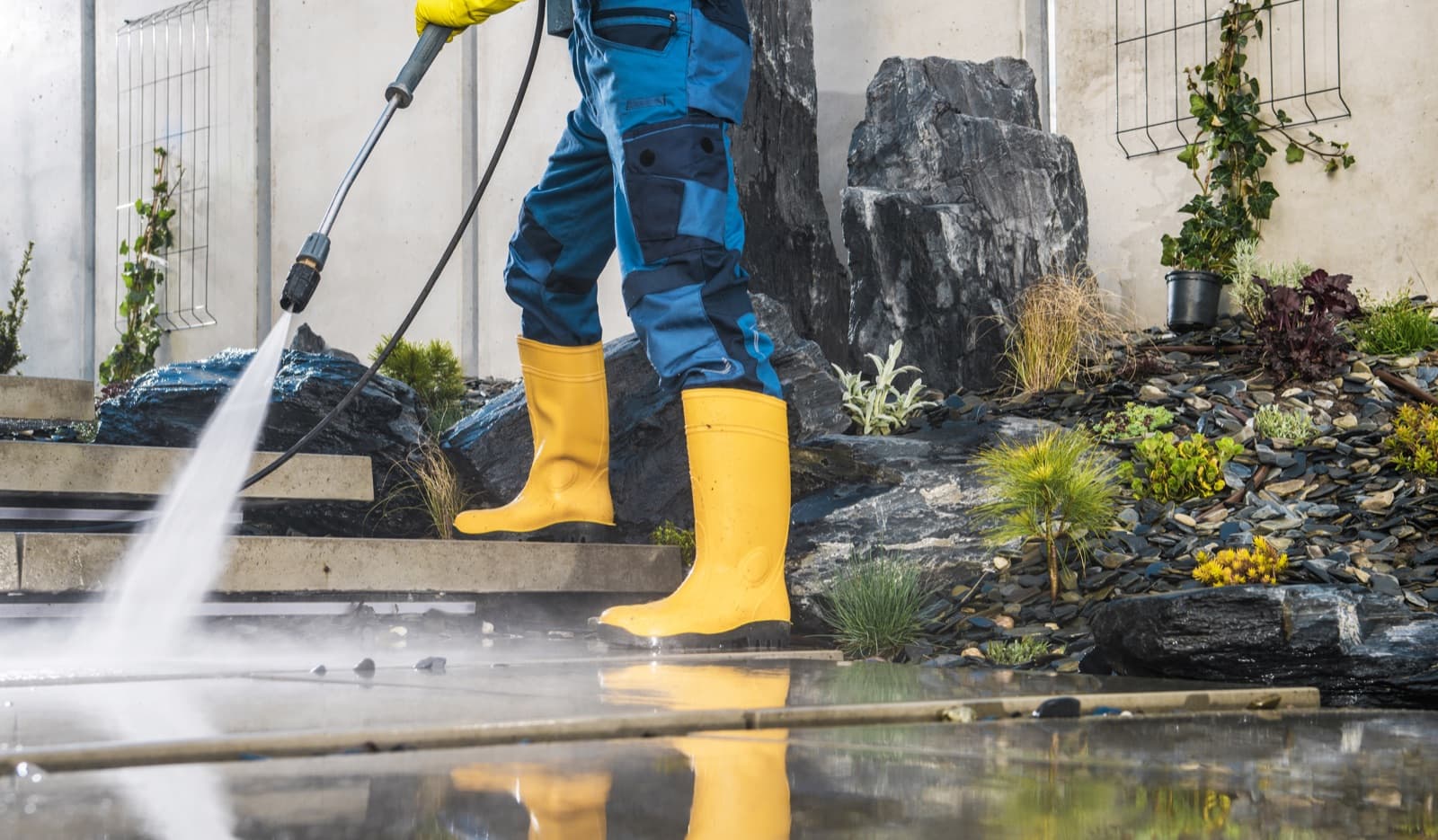
Patio cleaning: which method suits which surface?
The first instinct when a patio has turned green is to reach for the pressure washer. On some surfaces that is exactly right; on others it does more damage than the dirt ever did. What decides which method is an option is the surface material — not how dirty it is.
Concrete slabs and concrete paving
The most robust case: concrete slabs and concrete paving take cold-water as well as hot-water high pressure. What matters is what happens afterwards. The jointing sand is washed out along with the dirt and has to be brushed back in once the surface is clean. If that is forgotten, the surface settles over the years and weeds have an easier time in the open joints — the most common mistake when people clean a patio themselves.
Natural stone
Natural stone is not a single category, and blanket recommendations are misleading here. Hard natural stones such as granite are considerably less sensitive than soft, porous ones such as sandstone. On soft stone, too much pressure can roughen the surface — after which dirt takes hold faster than it did before. So for these surfaces: lower pressure, more distance, and if in doubt a test patch in an inconspicuous spot before the whole patio is worked on. Which methods exist at all, and where their limits lie, is covered in more detail in Cleaning paving and natural stone: high pressure, steam or by hand?.
Wood
On wood, high pressure tears the fibres open. The effect is treacherous because it cannot be seen straight after cleaning: the patio looks clean and then greys faster than before, because the roughened surface holds moisture and dirt better. The gentle option is the right one here — a brush, a cleaning agent suited to the surface, and working along the grain. Whatever the manufacturer specifies for that particular timber always takes precedence.
WPC and composite materials
With WPC and similar composite materials much the same applies as with wood, but for a different reason: the plastic content can be damaged at the surface by too much pressure or water that is too hot. The structure then goes dull and blotchy, and that cannot be undone. Because the composition differs from product to product, the manufacturer’s specifications are the binding basis here — not what worked on the neighbour’s patio.
Practical tip
The decisive test is one anyone can do themselves: clean an inconspicuous corner using the method you have in mind and let it dry for a day. Damage to the surface is invisible while it is wet — only once the area is dry does it show whether the surface has been roughened.
How often does a patio need cleaning?
That depends above all on the position and the aspect: shady, damp areas under trees need freshening up every 1–2 years, while sunny, well-ventilated spots often manage 3–5 years without. Preventing regularly is almost always cheaper than restoring occasionally — fresh green growth comes away with far less effort than moss that has been growing in for years. When a cosmetic problem turns into a safety one is described in Algae, moss and green growth on patios and footpaths: when does it become dangerous?.
What does a patio clean cost?
Pricing is generally worked out per square metre. How high that square-metre price turns out to be comes down to four things:
- Area: the most important factor — larger continuous areas can be worked more economically than small, awkwardly shaped ones.
- Degree of soiling: a light green film comes off faster than ingrained moss, where the joints need follow-up treatment as well.
- Material: wood and WPC call for the more laborious gentle method; robust concrete paving does not.
- Access: roof terraces, narrow carriage entrances or long runs for hose and machine all add to the work involved.
For a wider view of what determines the price of stone cleaning, see Stone cleaning: when is it needed, and what does it cost? — which also points you to the price calculator.
You can estimate what cleaning your patio will cost with our price calculator in 30 seconds, with no obligation.Calculate now →How Zamsa goes about it
We choose the method to suit the surface rather than out of habit — the check happens before the first move, not after it. On request we clean a test patch in an inconspicuous spot beforehand, so you can judge the result once it is dry and before the whole patio is done. And the jointing sand is brushed back in after cleaning. What else is included is set out on our page on stone cleaning.
Not legal or tax advice
This article gives a general overview and is no substitute for individual legal or tax advice. Laws, deadlines and responsibilities can change and may differ in an individual case. For a binding assessment of your particular situation, please consult a solicitor or tax adviser, or the relevant authority.
You might also find this useful.
Stone cleaning: when is it needed, and what does it cost?
Read more
Algae, moss and dirt on paving and façades — causes and prevention
Read more
Cleaning paving and natural stone: high pressure, steam or by hand?
Read more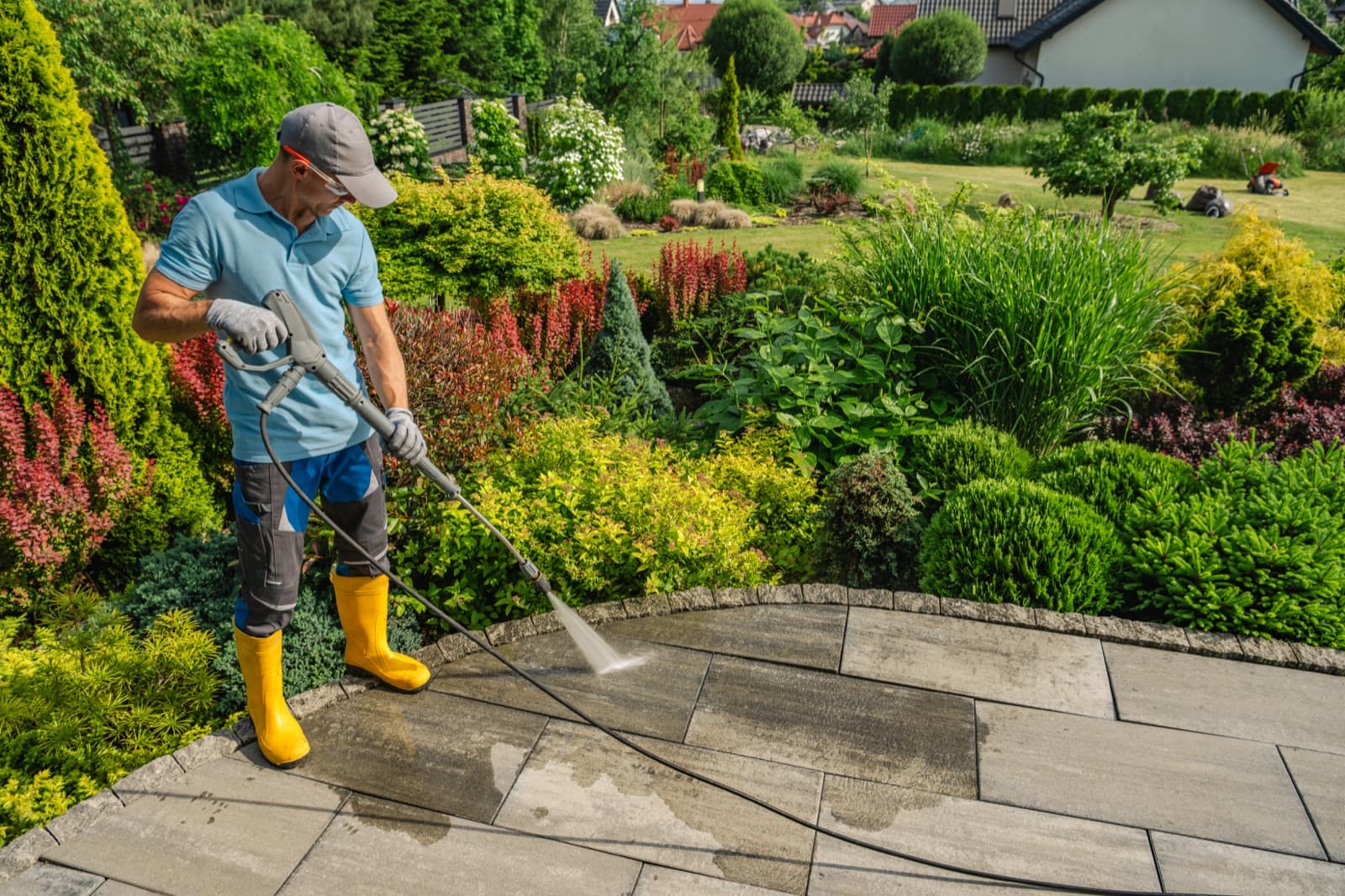
Algae, moss and green growth on patios and footpaths: when does it become dangerous?
Read more
Spielplatzkontrolle in Wohnanlagen: Pflichten, Intervalle, Dokumentation
Read more
Treppenhaus als Fluchtweg: Was darf dort stehen — und was nicht?
Read more
Müll im Mehrfamilienhaus: Was Fehlwürfe wirklich kosten
Read more
The clearing and gritting duty in Hesse — what owners and landlords need to know
Read moreLet us talk about your property.
Tell us what you need — we usually reply within one working day with a quote, free and without obligation.
- 1


Send an enquiry
Through the contact form, by phone, WhatsApp or email — whichever suits you best.
- 2


Arrange a visit
We get back to you promptly and, where useful, arrange a visit on site that fits your schedule.
- 3


Receive a free quote
You get a transparent quote with no obligation — no hidden costs, no small print.
- 4


You decide
No pressure and no lengthy commitment: take your time to decide whether it is a good fit.