
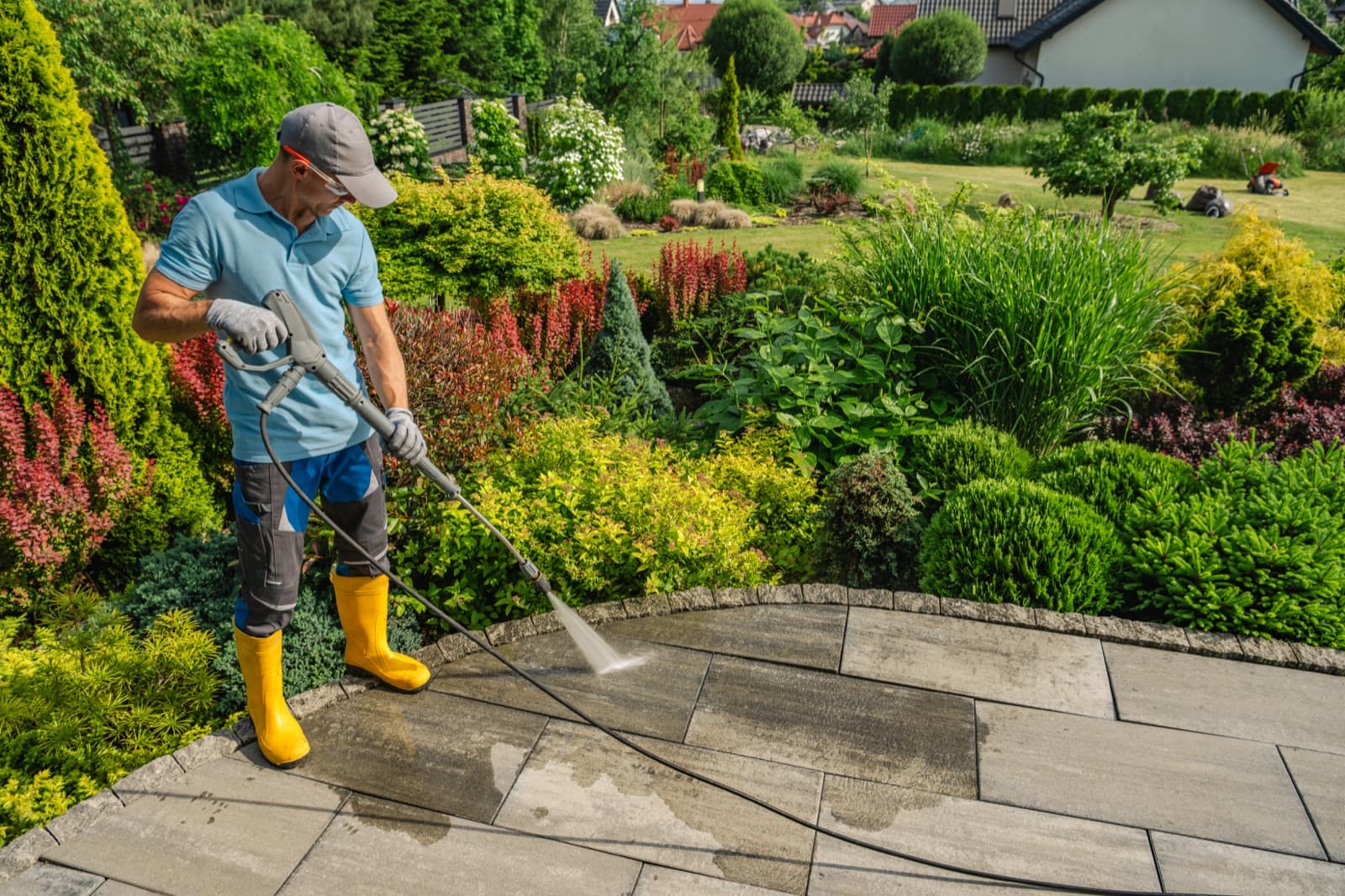
Algae, moss and green growth on patios and footpaths: when does it become dangerous?
The greenish film on a patio, driveway or footpath is more than a cosmetic problem — in shady, damp areas in particular it soon becomes a genuine slip hazard. What lies behind it, and when professional cleaning becomes worthwhile.
Why algae and moss form in the first place
Green growth appears above all where damp stands for a long time and little sun gets through — typically on the north sides of buildings, under trees or on open-pored, unsealed paving. Porous materials such as untreated natural stone or older concrete pavers give algae and mosses far more to take hold of than smooth, sealed surfaces. The causes, and what prevents them, are set out in more detail in Algae, moss and dirt on paving and façades — causes and prevention.
The real risk: slipping
A wet layer of algae forms a greasy film that considerably reduces the grip of a surface — much like wet leaves, except that it does not disappear again once autumn is over but stays on the surface permanently. In legal terms the same basis applies as for winter maintenance: the duty to keep the way safe (Verkehrssicherungspflicht). Anyone responsible for a property has to take the precautions that can reasonably be expected so that no danger to third parties arises from it; if that is neglected and someone is injured, liability under § 823 BGB (liability in damages) comes into consideration. How this mechanism works in detail is described for snow and ice in our article Clearing and gritting duty in Hesse.
Conversely, that does not mean every green joint automatically leads to liability. In 2022 the OLG Frankfurt a. M. (Frankfurt Higher Regional Court) rejected a claim after a fall on a rain-soaked access path covered in leaves and moss: an owner does not have to make a minor path safe against every conceivable risk, and anyone using it has to accept its visible condition and adjust to it. What matters, then, is where the area lies and who uses it: on heavily overgrown, visibly slippery surfaces in well-used places (building entrances, access paths, underground car park ramps, steps), where visitors, tenants or delivery staff may expect a safe route, you should act promptly.
Practical note for landlords and managing agents
As with winter maintenance, the same applies here: the duty can be passed on to tenants or to a service provider, but oversight of it stays with the owner. They have to satisfy themselves that the areas really are being kept in a safe condition.
How often is professional cleaning worthwhile?
There is no blanket interval — the rhythm depends heavily on position, shade and material. As a rough guide:
- Sunny, well-ventilated areas: every 2–3 years is usually enough
- Shady, damp areas (north side, under trees): visible growth is often back after just 12–18 months
- Heavily used safety-critical areas (entrances, ramps, steps): shorter inspection intervals are advisable, regardless of how the surface looks
What the surface is cleaned with depends on the surface itself — wood and WPC do not tolerate the high pressure that concrete slabs have no trouble with. Which method suits which patio surface is set out in Patio cleaning: which method suits which surface?.
You can estimate what cleaning your surface will cost with our price calculator in 30 seconds, with no obligation.Calculate now →Cleaning alone is often not enough
If the surface is not impregnated as well after cleaning, the green growth often returns within a few months in damp, shady positions. Sealing lengthens the interval noticeably and is usually the more economical solution on surfaces that are affected again and again.
Practical tip
Critical spots such as entrance steps or ramps can easily be monitored by a visual check between the major cleaning appointments — a photo in the visit report in the customer portal is a reliable record of when they were last checked.
How Zamsa helps
We remove moss, algae and green growth with hot-water high pressure — the heat is harder on the spores than cold water, so the surface stays clean for longer. As part of ongoing care we keep an eye on critical areas such as entrances, steps and ramps, and we document every visit in the customer portal. What is included is set out on our page on stone cleaning.
Sources
- § 823 BGB – Schadensersatzpflicht (liability in damages)
- OLG Frankfurt a. M., Beschluss vom 8.9.2022 – 17 W 17/22: duty to keep the way safe on your own property (fall on a rain-soaked access path covered in leaves and moss)
- Haufe – Verkehrssicherungspflicht (duty to keep the way safe): case law at a glance (limits of what is reasonable, clearing leaves)
- GEV Versicherung – Verkehrssicherungspflicht (duty to keep the way safe) for owners (keeping steps free of leaves and moss, duty to check and supervise where the duty has been passed on)
Not legal or tax advice
This article gives a general overview and is no substitute for individual legal or tax advice. Laws, deadlines and responsibilities can change and may differ in an individual case. For a binding assessment of your particular situation, please consult a solicitor or tax adviser, or the relevant authority.
You might also find this useful.
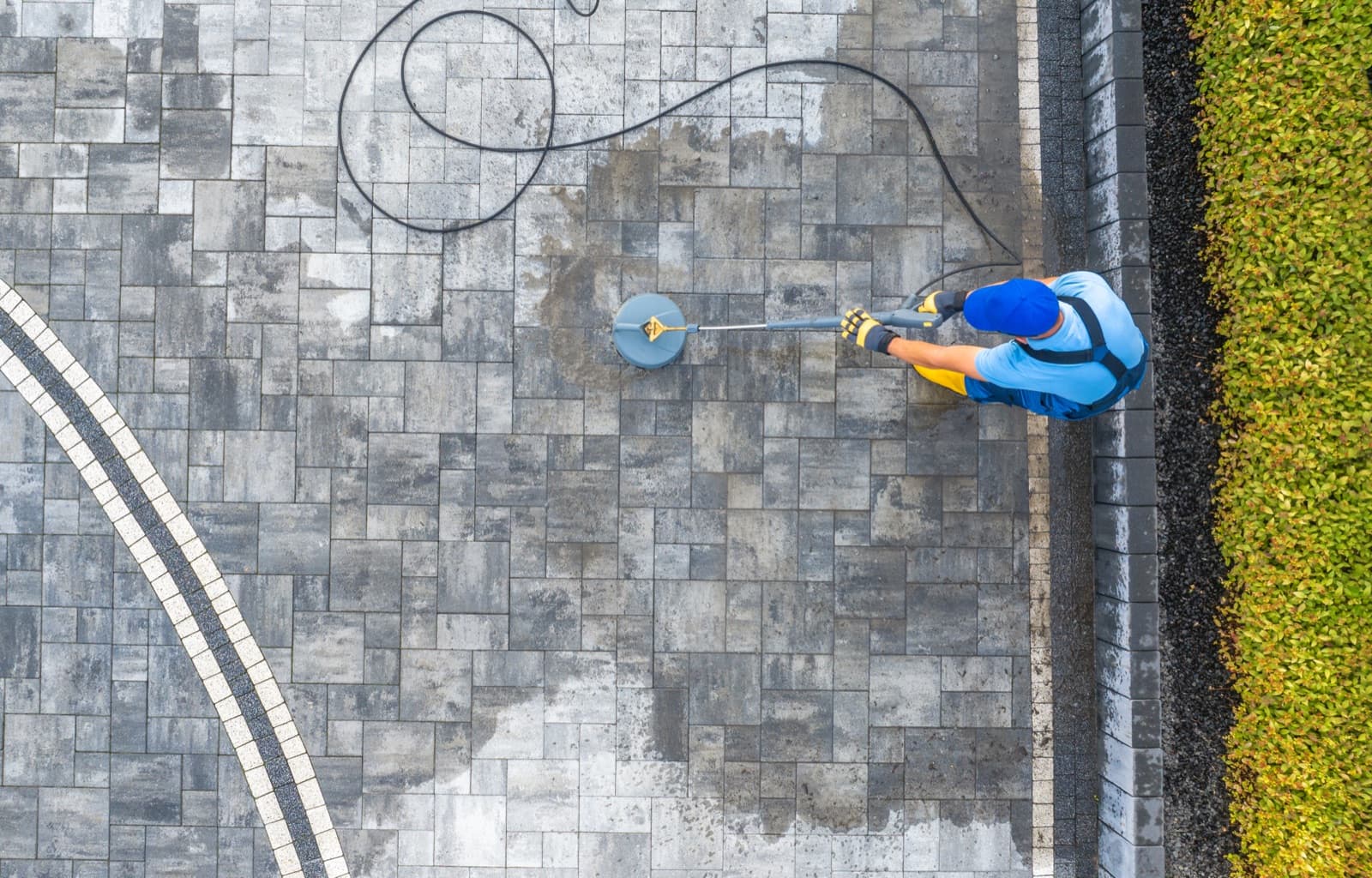
Stone cleaning: when is it needed, and what does it cost?
Read more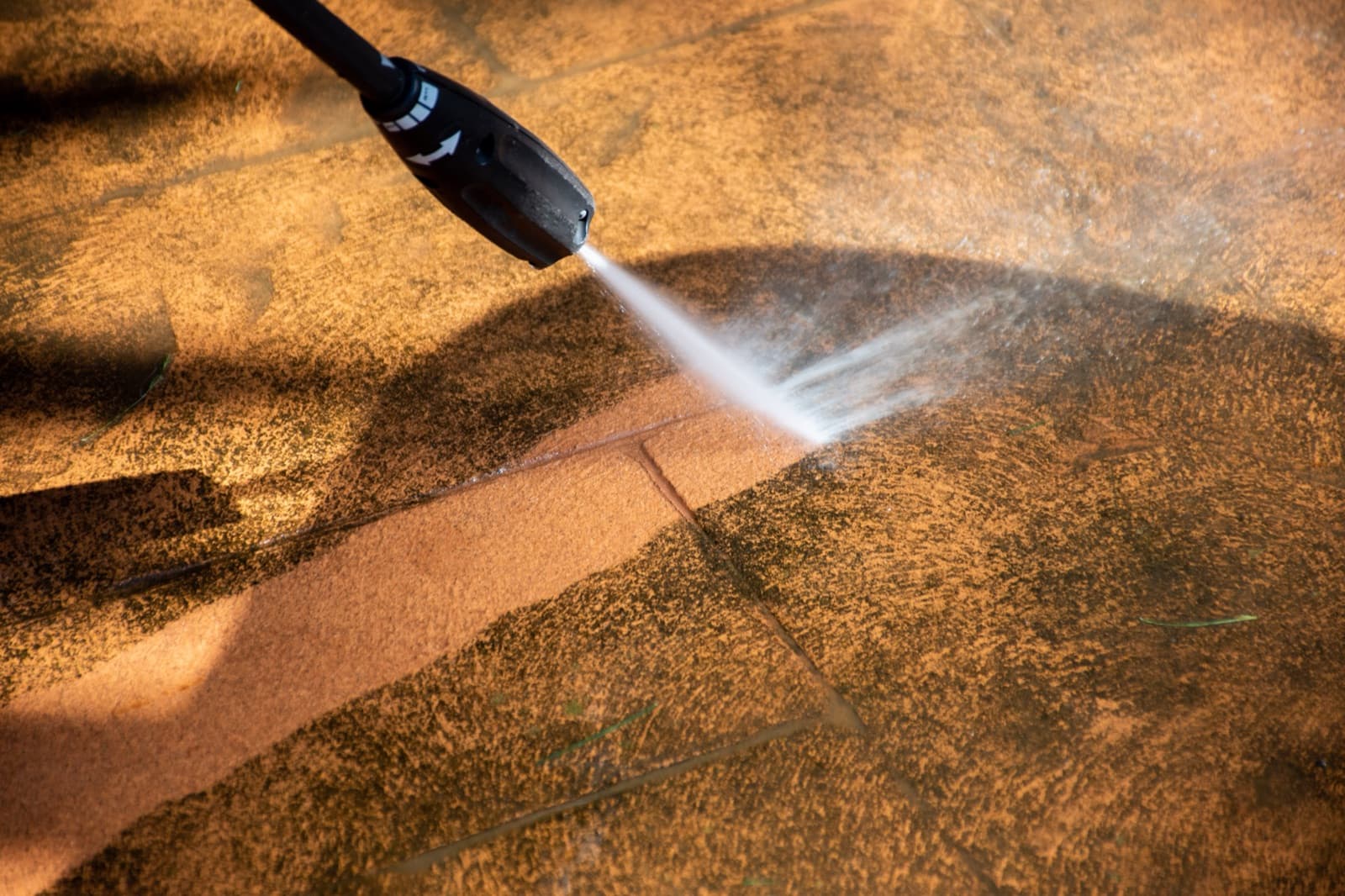
Algae, moss and dirt on paving and façades — causes and prevention
Read more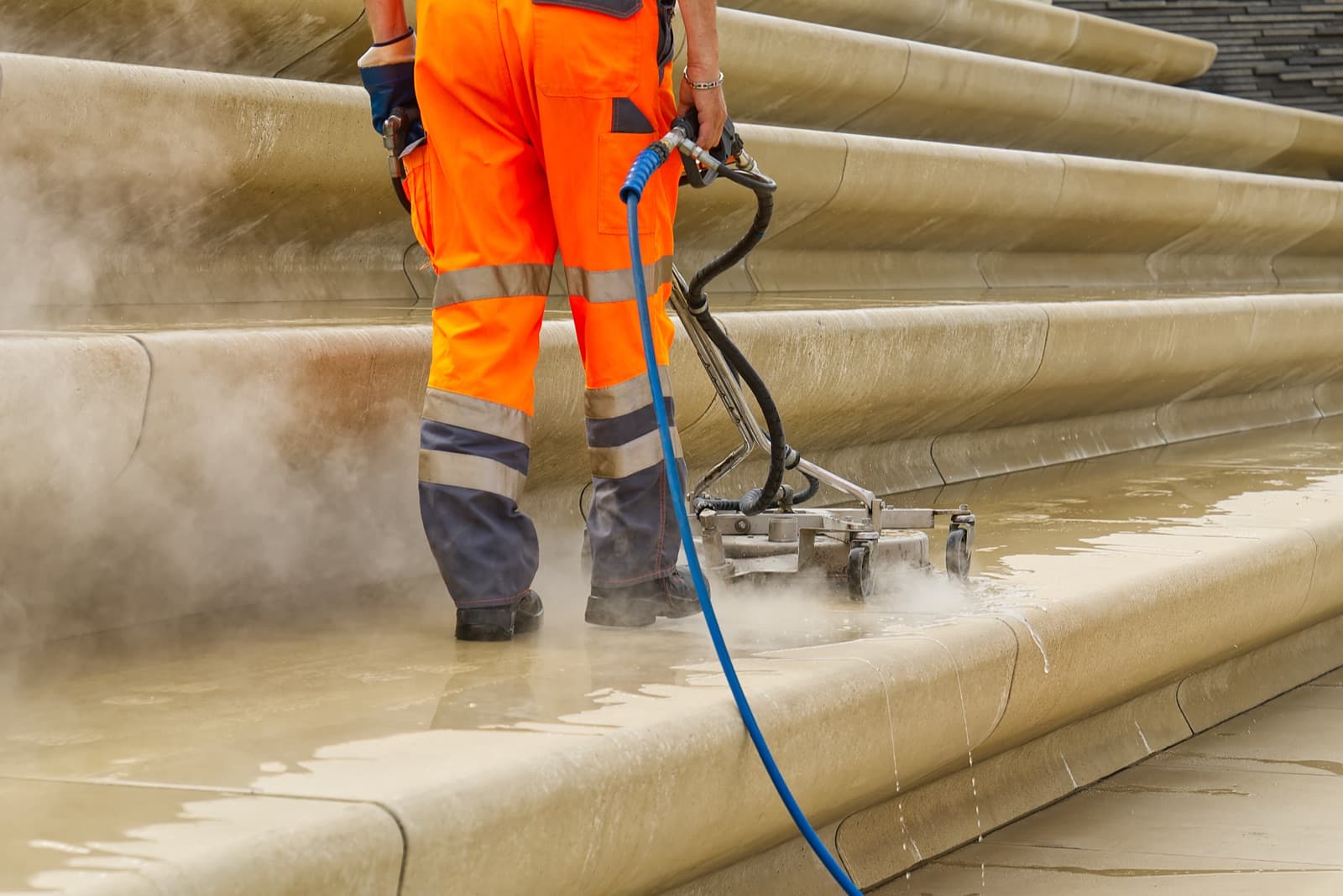
Cleaning paving and natural stone: high pressure, steam or by hand?
Read more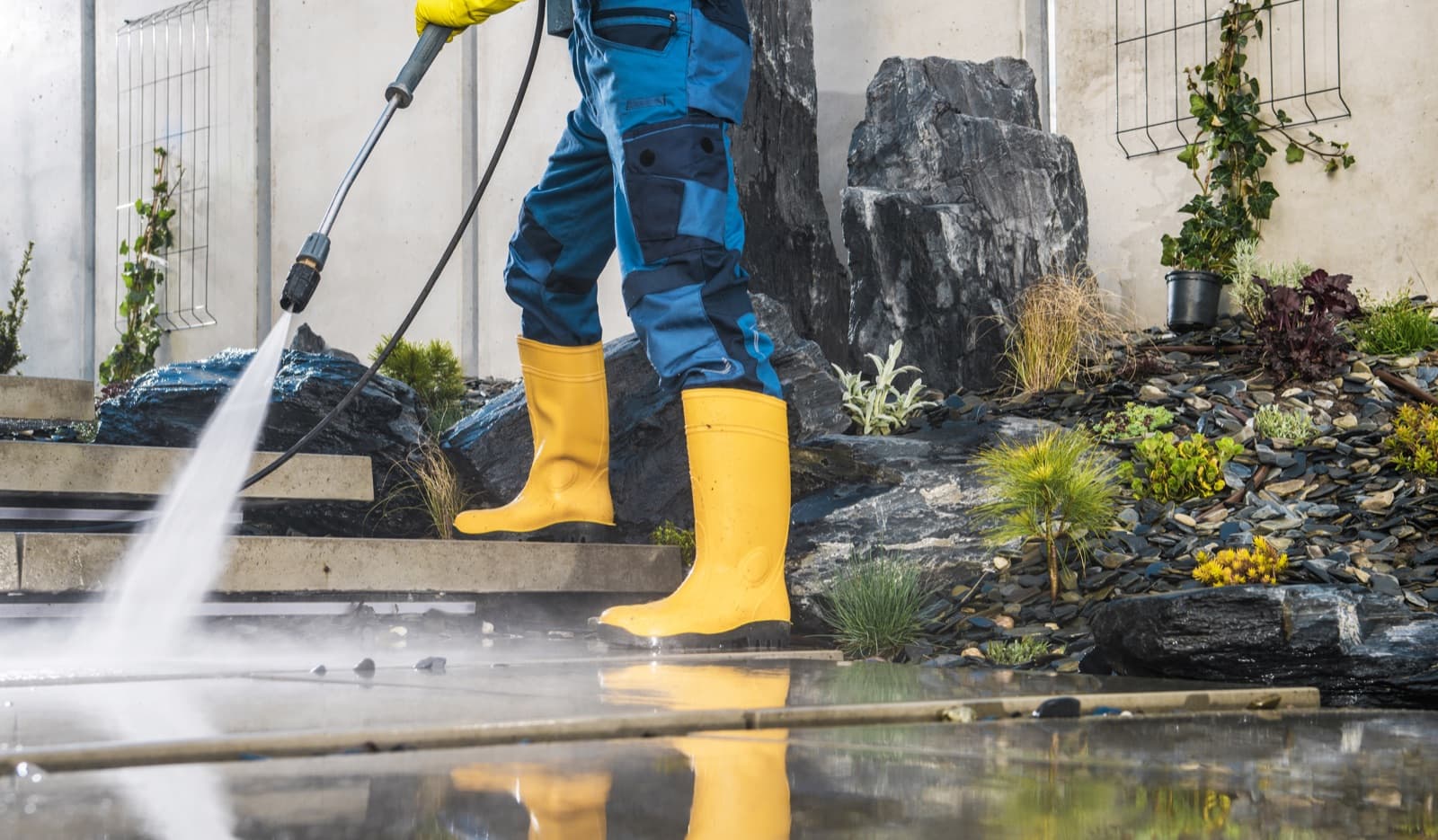
Patio cleaning: which method suits which surface?
Read more
Spielplatzkontrolle in Wohnanlagen: Pflichten, Intervalle, Dokumentation
Read more
Treppenhaus als Fluchtweg: Was darf dort stehen — und was nicht?
Read more
Müll im Mehrfamilienhaus: Was Fehlwürfe wirklich kosten
Read more
The clearing and gritting duty in Hesse — what owners and landlords need to know
Read moreLet us talk about your property.
Tell us what you need — we usually reply within one working day with a quote, free and without obligation.
- 1


Send an enquiry
Through the contact form, by phone, WhatsApp or email — whichever suits you best.
- 2


Arrange a visit
We get back to you promptly and, where useful, arrange a visit on site that fits your schedule.
- 3


Receive a free quote
You get a transparent quote with no obligation — no hidden costs, no small print.
- 4


You decide
No pressure and no lengthy commitment: take your time to decide whether it is a good fit.